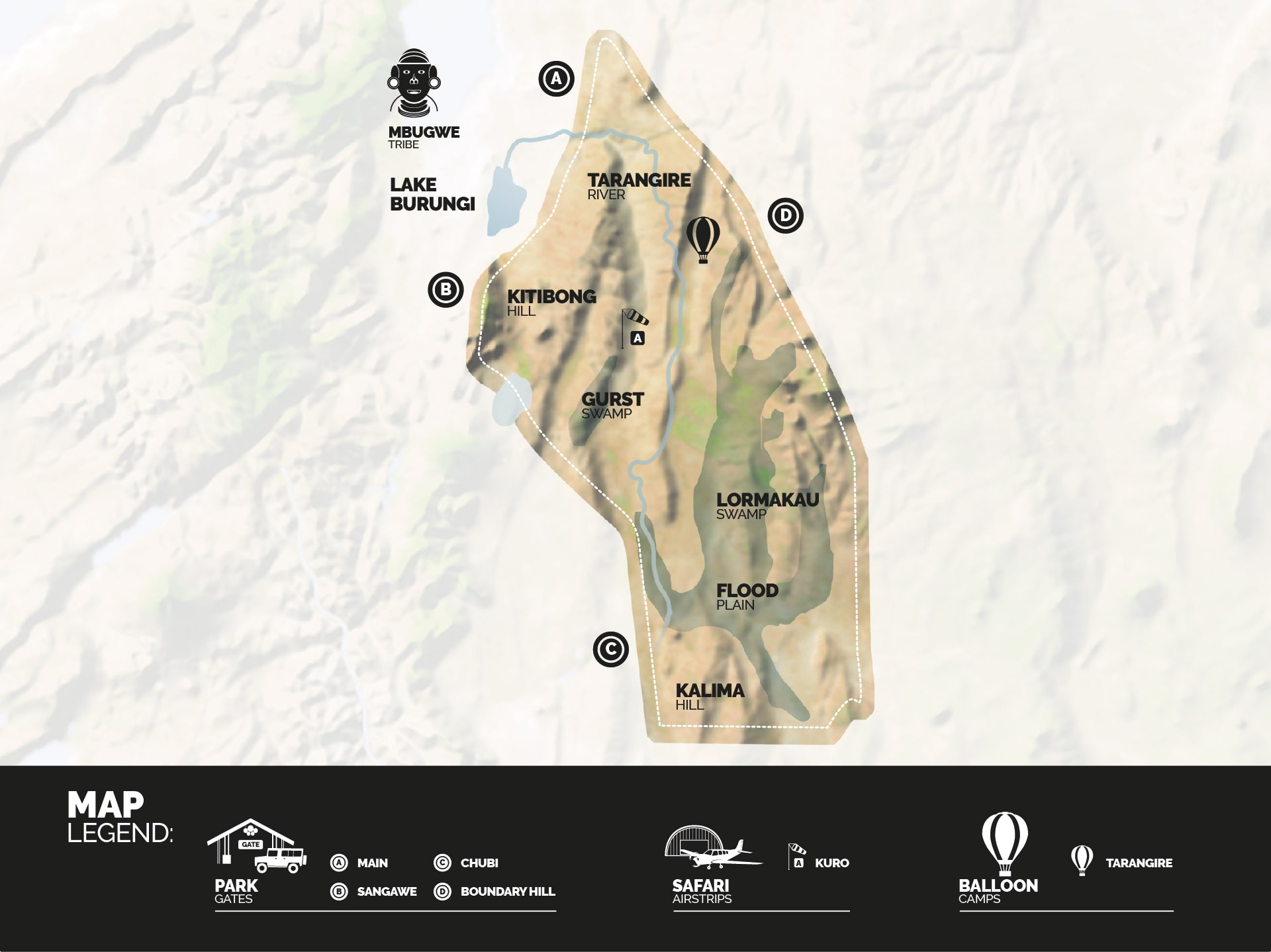
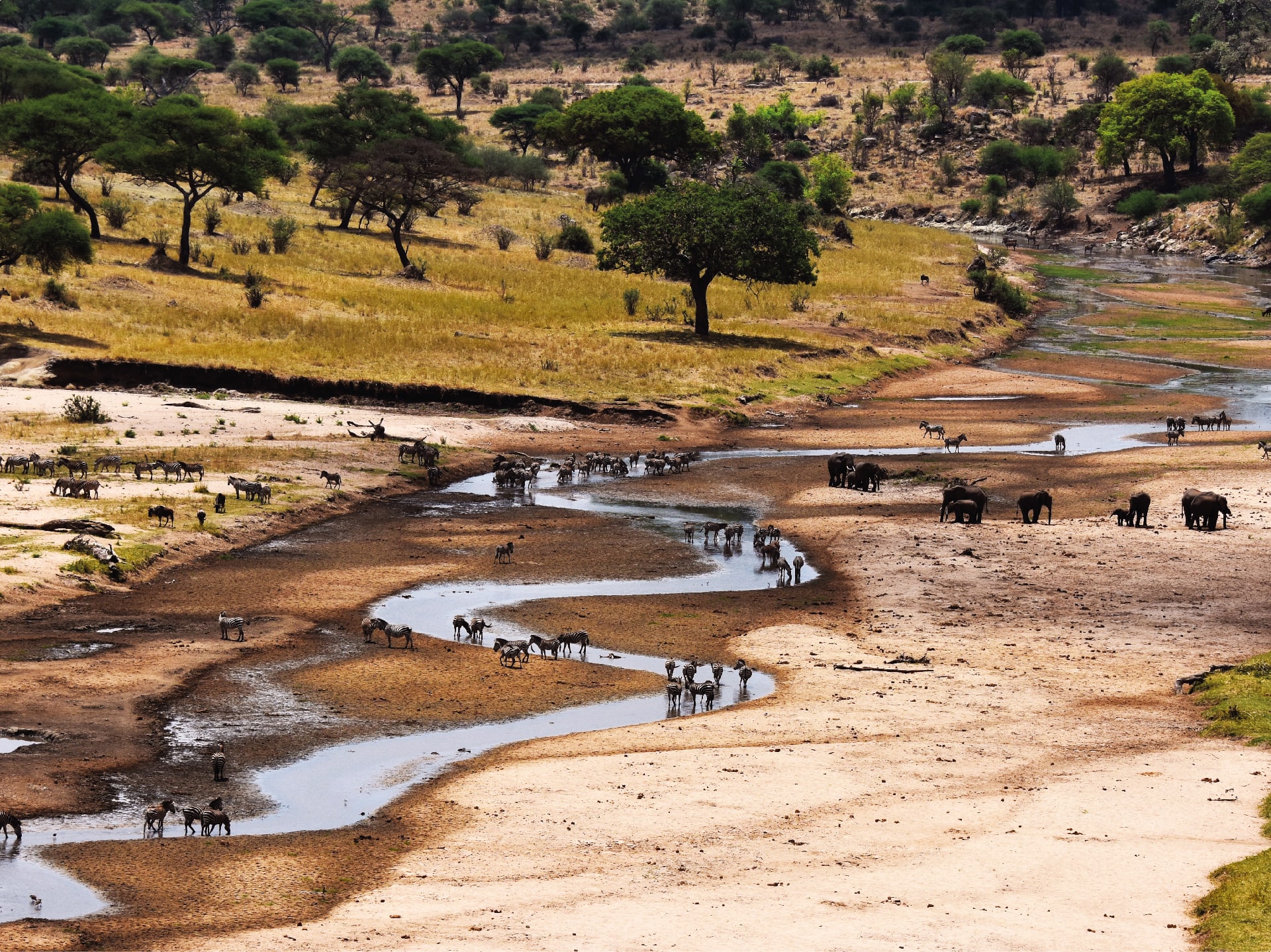
In the heart of northern Tanzania, the Tarangire National Park offers a natural spectacle of extraordinary beauty and biodiversity. This park, often less crowded than its famous neighbours such as the Serengeti or the Ngorongoro Crater, is distinguished by the scenic presence of majestic centuries-old baobab trees and one of the highest concentrations of elephants in East Africa. The Tarangire River, which flows through the park for much of the year, is the focus of animal life during the dry season and creates ideal landscapes for photography and wildlife observation.
Where the park is located and how far it is from the other safari stops
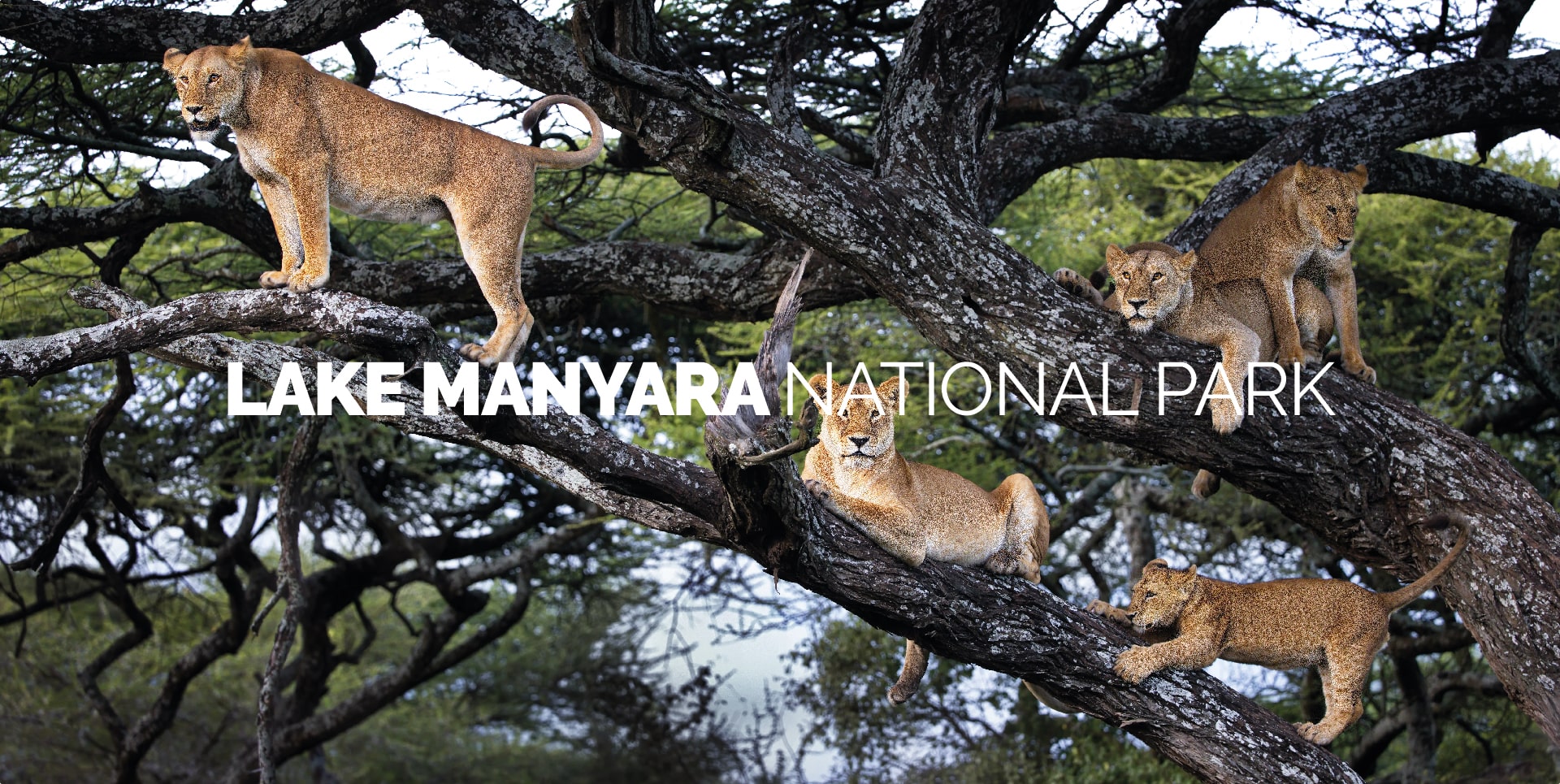
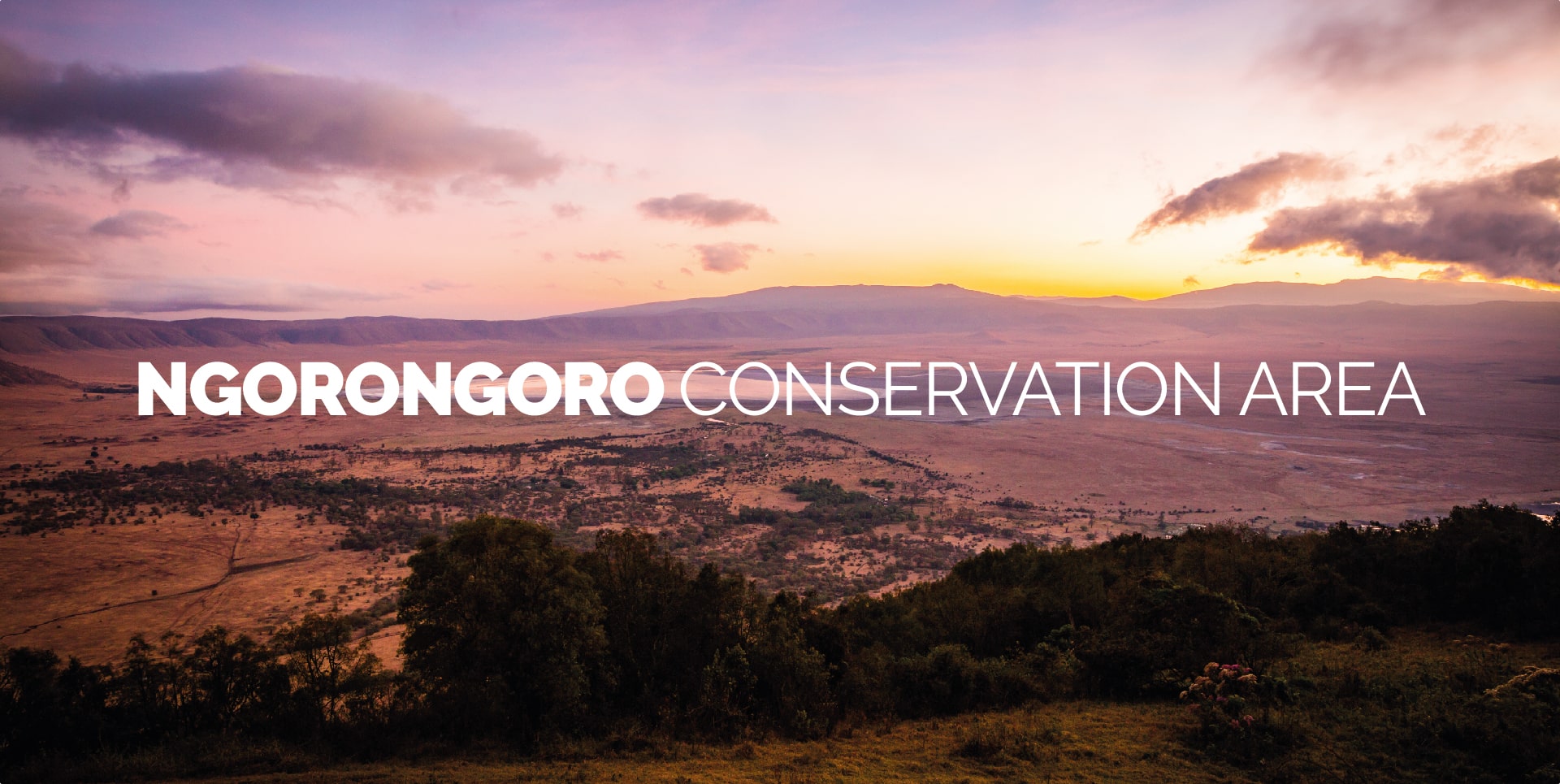
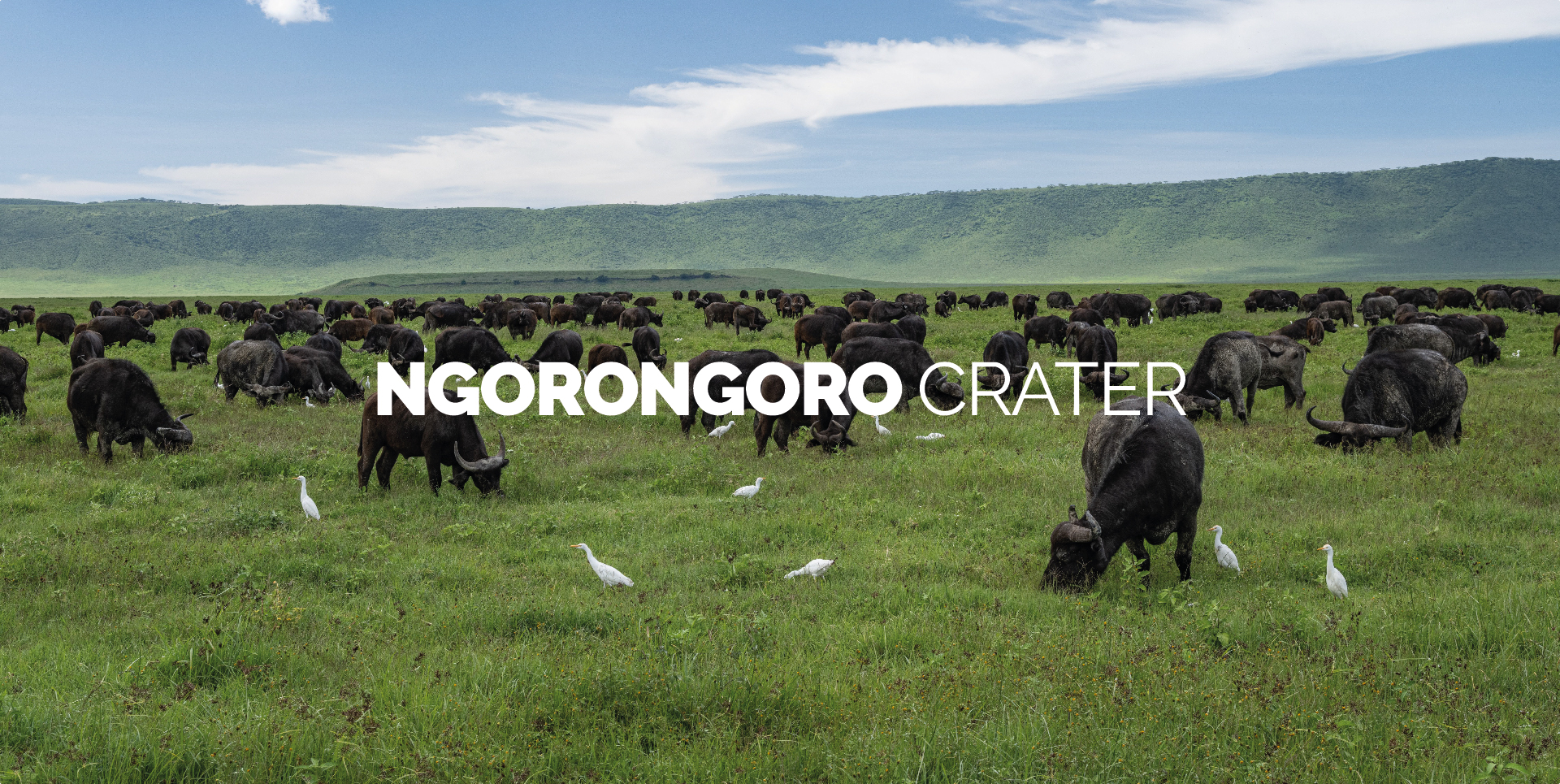
The Tarangire is located about 120 km south-west of Arusha, and is easily reached in about two hours by car. Its strategic location makes it a perfect stop along the so-called Northern Circuit, the classic safari itinerary in Tanzania that also includes Lake Manyara, the famous Ngorongoro Crater and the Serengeti Park. In many itineraries, the Tarangire is proposed as the first park to visit: an ideal choice to immediately immerse oneself in the wilderness with powerful but less chaotic landscapes.
How to reach Tarangire and how it is visited
The easiest way to reach the park is by land from Arusha. The road is well travelled and allows the Tarangire National Park to be included in safaris of 4 days or more, or as a day trip. The most common types of visit are game drives in 4×4 vehicles with expert guides. Those seeking a more exclusive experience can opt for lodges inside the park, with privileged access to the best areas for animal spotting.
When to visit Tarangire: seasons and climate
The dry season, which runs from July to October, is the ideal time to visit the Tarangire. During these months, animals migrate within the park and concentrate along the river, making sightings more frequent and spectacular.
In the green season (November to June), the vegetation is more lush and the landscape takes on vivid and fascinating colours. However, the density of animals can be lower and the trails less easy. However, this season is perfect for those seeking silence, atmosphere and more intimate safaris.
Useful information for accessing the park
To access Tarangire National Park, it is necessary to purchase a day pass, available through the official TANAPA website. Prices vary depending on the season, the nationality of the visitor and the type of visit (day or night).
Relying on an experienced operator such as Tracks of Africa Safari Adventure guarantees not only practical organisation, but also complete assistance in the field, from park entry to expert guidance during safaris.
What makes this park unique: baobabs and elephants
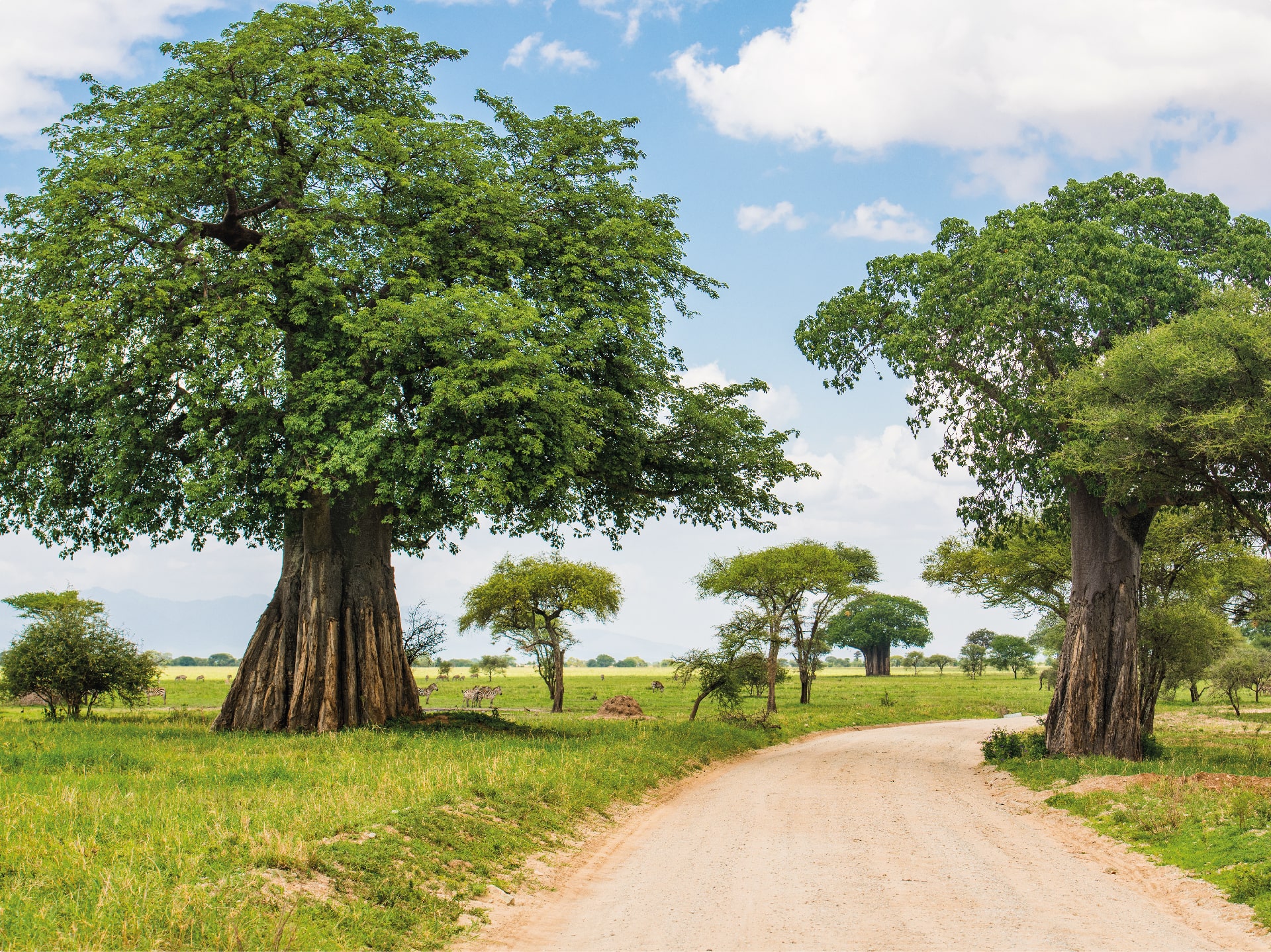
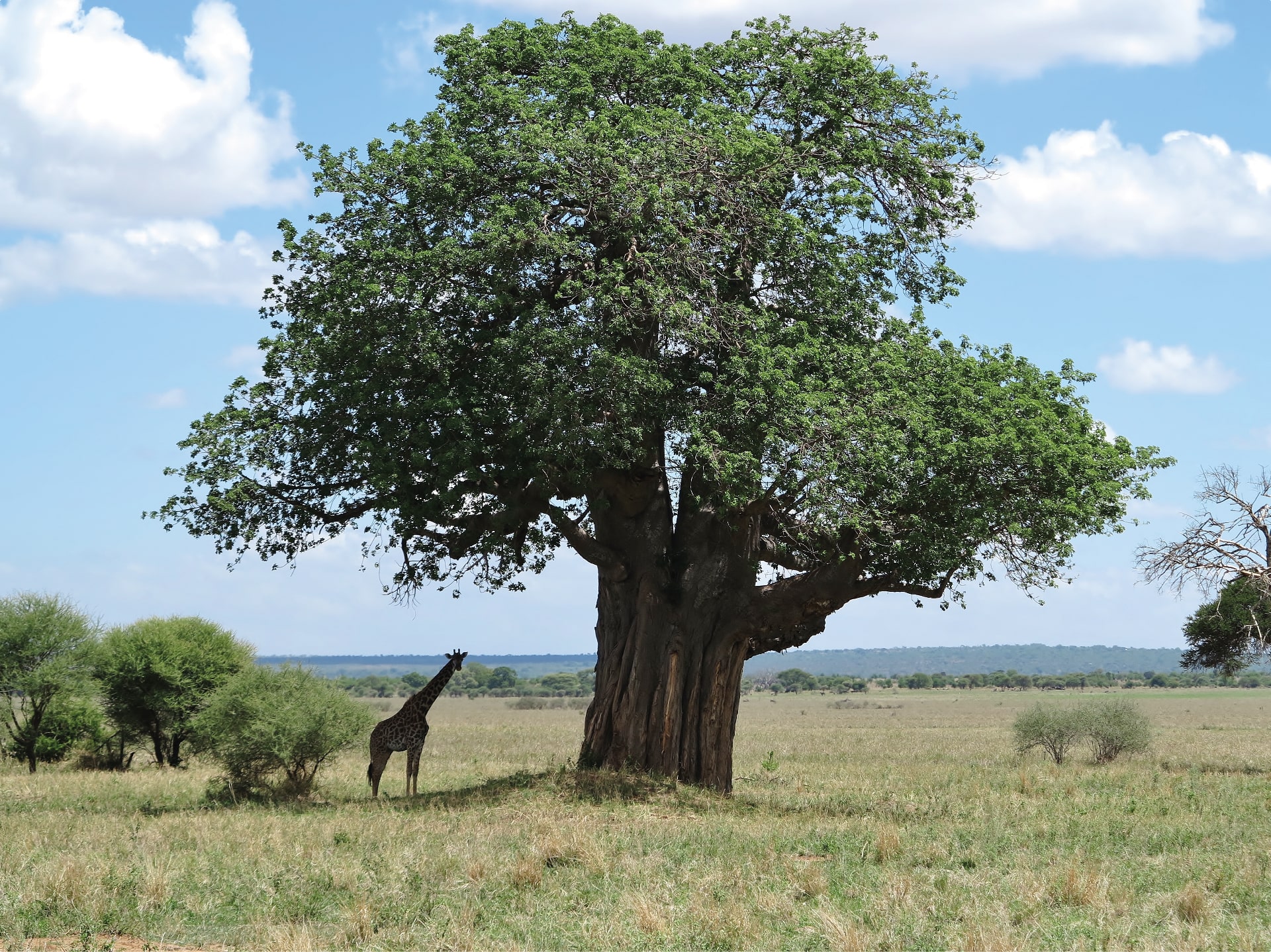
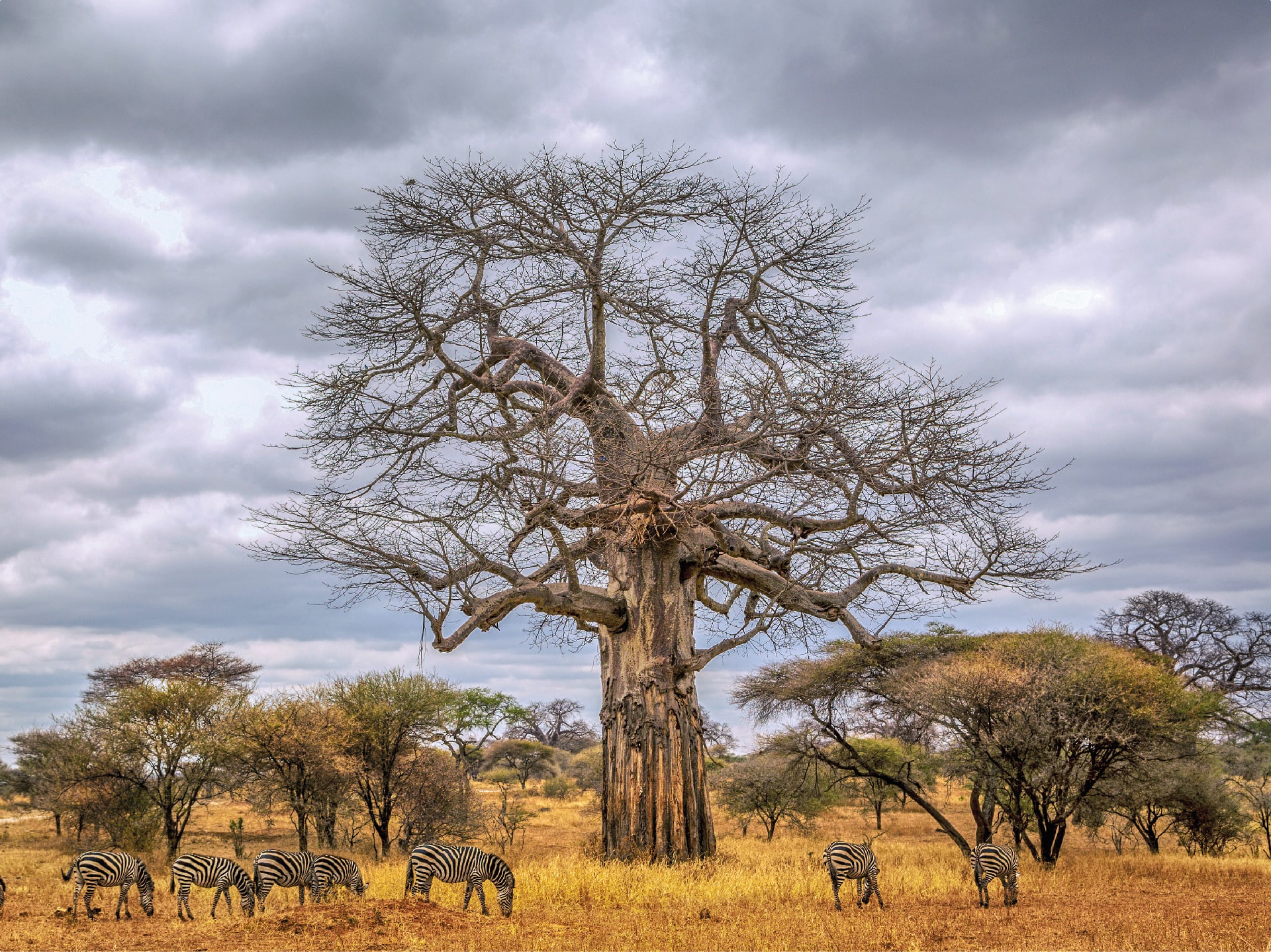
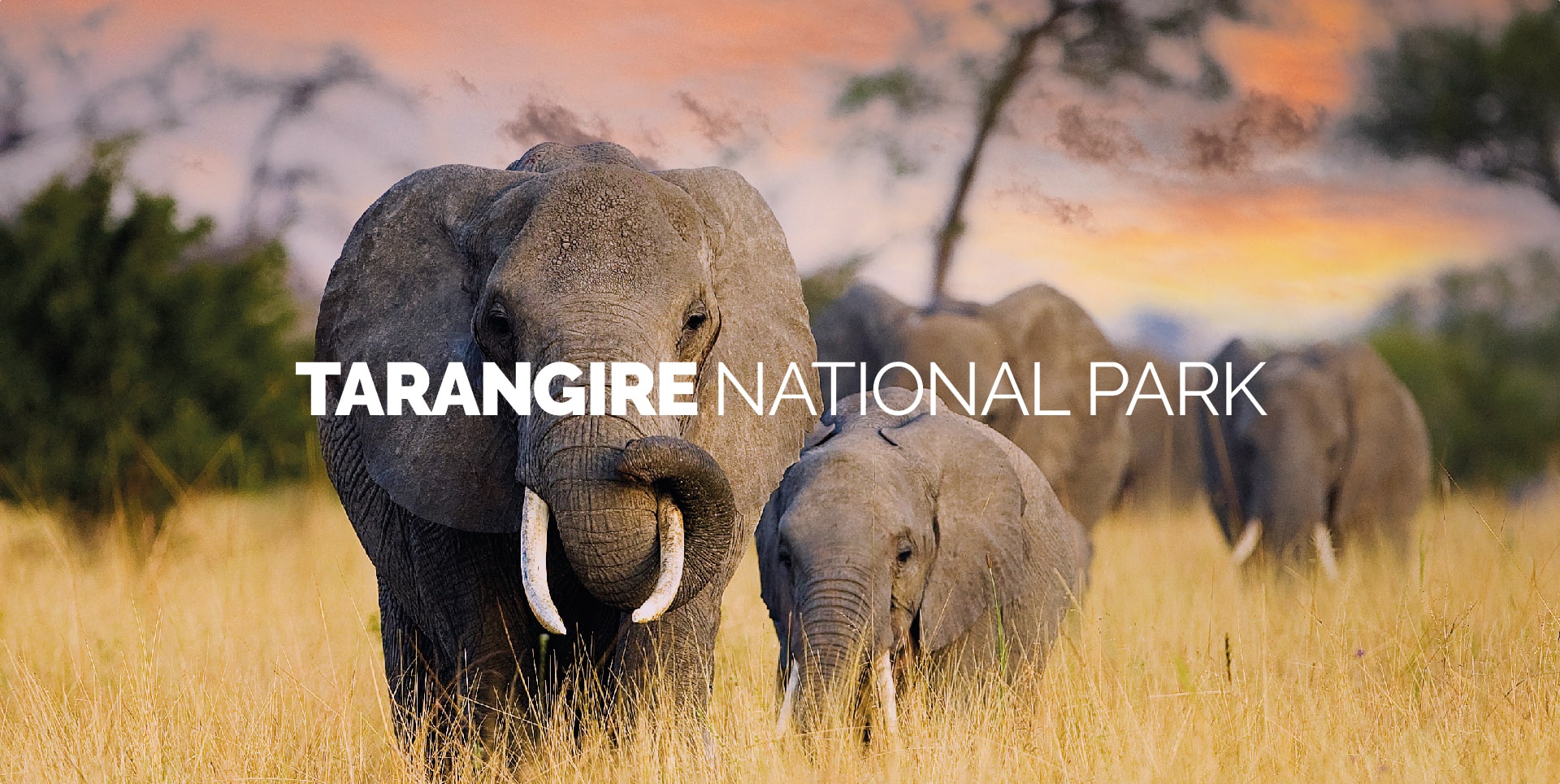
One of the distinctive features of the Tarangire is its spectacular vegetation, dominated by giant baobabs that seem to have been carved in time. These iconic trees dot the savannah and provide shade and shelter for wildlife. Called trees of life, these ‘giants’, which can reach a height of 25-30 metres, with a trunk 11 metres in diameter, have the peculiarity of collecting up to 32,000 litres of water. This capacity is particularly useful for both the elephants and the indigenous peoples, during the season of severe drought. Their fruits, much appreciated by baboons and other monkeys, are of fundamental importance to the local tribes who obtain food and medicine from them. But the real attraction are the numerous herds of elephants, visible in every corner of the park, often drinking from the river or moving in groups along the savannah. With a population estimated to be among the highest in the whole of East Africa, the park is a paradise for those who wish to observe these magnificent pachyderms up close in their natural habitat.
What animals can be spotted
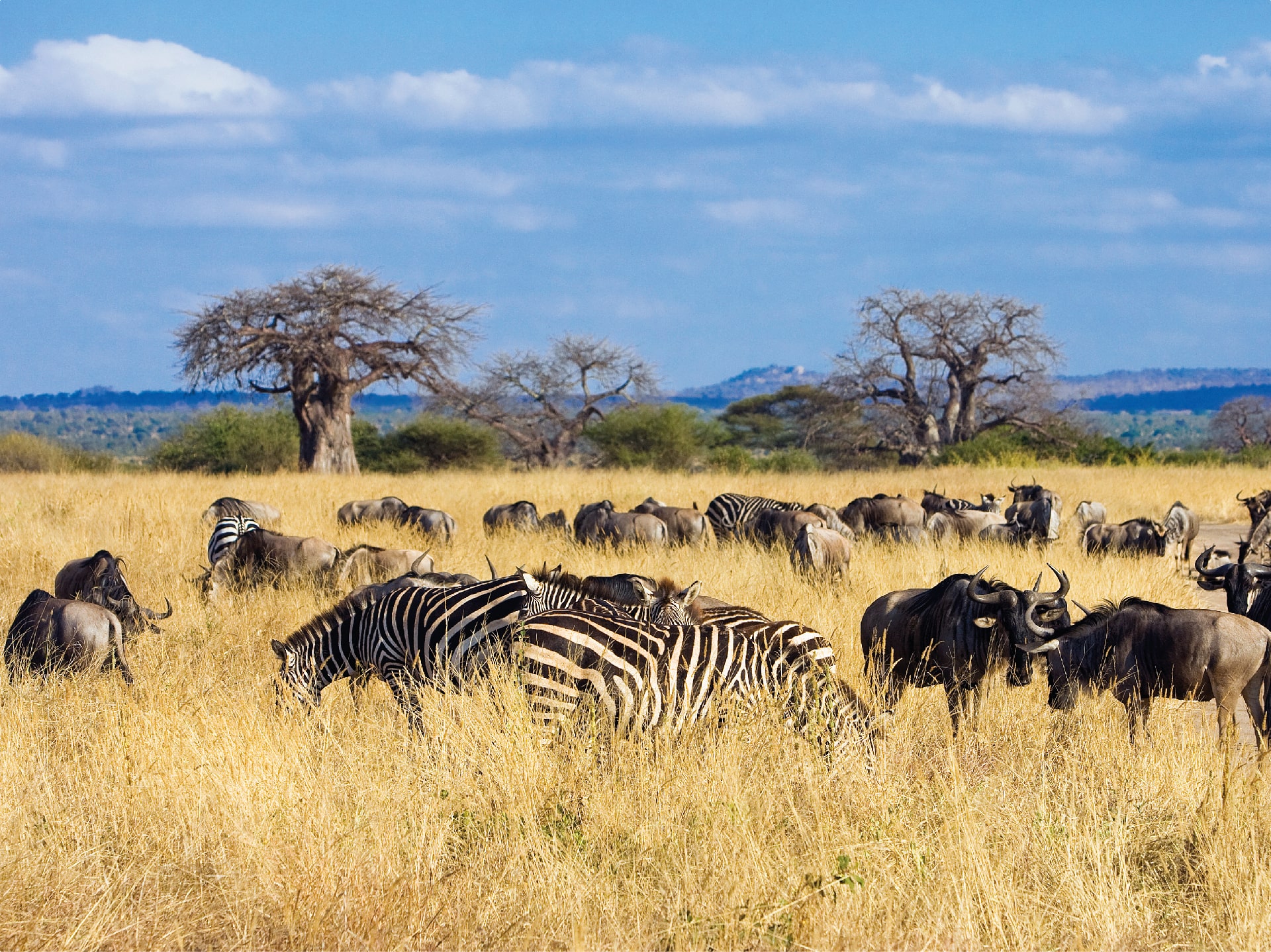
The only place in Tanzania where unusual antelopes such as the majestic fringed-eared oryx and the long-necked gerenuk can usually be seen, the Tarangire National Park is an elephant paradise. During the height of the migration, in addition to elephants, the landscape is populated by hundreds of different species of animals: wildebeest, zebra, giraffe, buffalo, kudu, ostrich, impala, Thomson’s gazelle and hartebeest create a continuous movement through the savannah grass, while lions and leopards rest in the branches of the sausage trees. Disused termite mounds are often frequented by colonies of friendly dwarf mongooses and pairs of barn owls that attract attention with their noisy duet, similar to the sound of a clock. The marshes, tinged green almost all year round, are home to more species of nesting birds than any other habitat on Earth. Observation can range from the Kori’s bustard, the heaviest flying bird, to the big-headed ostrich, the world’s largest bird, from the red-tailed weaver to the ashen starling, making the Tarangire an excellent destination for birdwatchers as well.
Natural attractions and must-see sights
- The Tarangire River: a vital water source and meeting point for herds of elephants, zebras and predators.
- The giant baobabs: among the most photographed in Tanzania, they create striking scenery at sunset.
- Marshes and hills: home to diverse fauna and offering vantage points with breathtaking views of the park.
Activities available in the park
The Tarangire offers various activities to make the safari experience complete:
- Morning, afternoon and night game drives, ideal for sightings at different times of day.
- Walking safaris, available in some authorised areas and always with an armed guide.
- Birdwatching, thanks to the exceptional variety of species that inhabit the wetlands and hills.
- Balloon Safari, to observe wildlife from an exclusive and extraordinary perspective.
Who is recommended to visit the Tarangire
Tarangire National Park is perfect for those seeking a quieter, more intimate experience than the more touristy parks. It is ideal for photographers, families and first-time safari travellers, but also for those who have already visited iconic places and want a more authentic dimension.
The landscapes, abundance of wildlife and quiet atmosphere also make it a perfect stop on safari in Tanzania 6 or 7 days.
Why not leave without seeing the Tarangire
An unspoilt heritage site of enchanting beauty and value, the Tarangire National Park, with its comparative giants (elephants and baobabs), is a true icon of the African continent and a popular stop for travellers on the northern safari circuit to Ngorongoro and the Serengeti.
The images of the centuries-old baobabs and elephants moving slowly along the river remain etched in the memory as one of the most intense moments of a trip to Africa.
A safari here leaves room for contemplation, connection with nature and discovery of an authentic and powerful corner of Tanzania.