Every year, in the vast horizons of the Serengeti, a natural miracle takes place that has fascinated explorers, biologists and travellers from all over the world: the Great Migration in the Serengeti National Park. It is a cyclical phenomenon, gigantic and perfectly synchronised with the rhythms of nature.
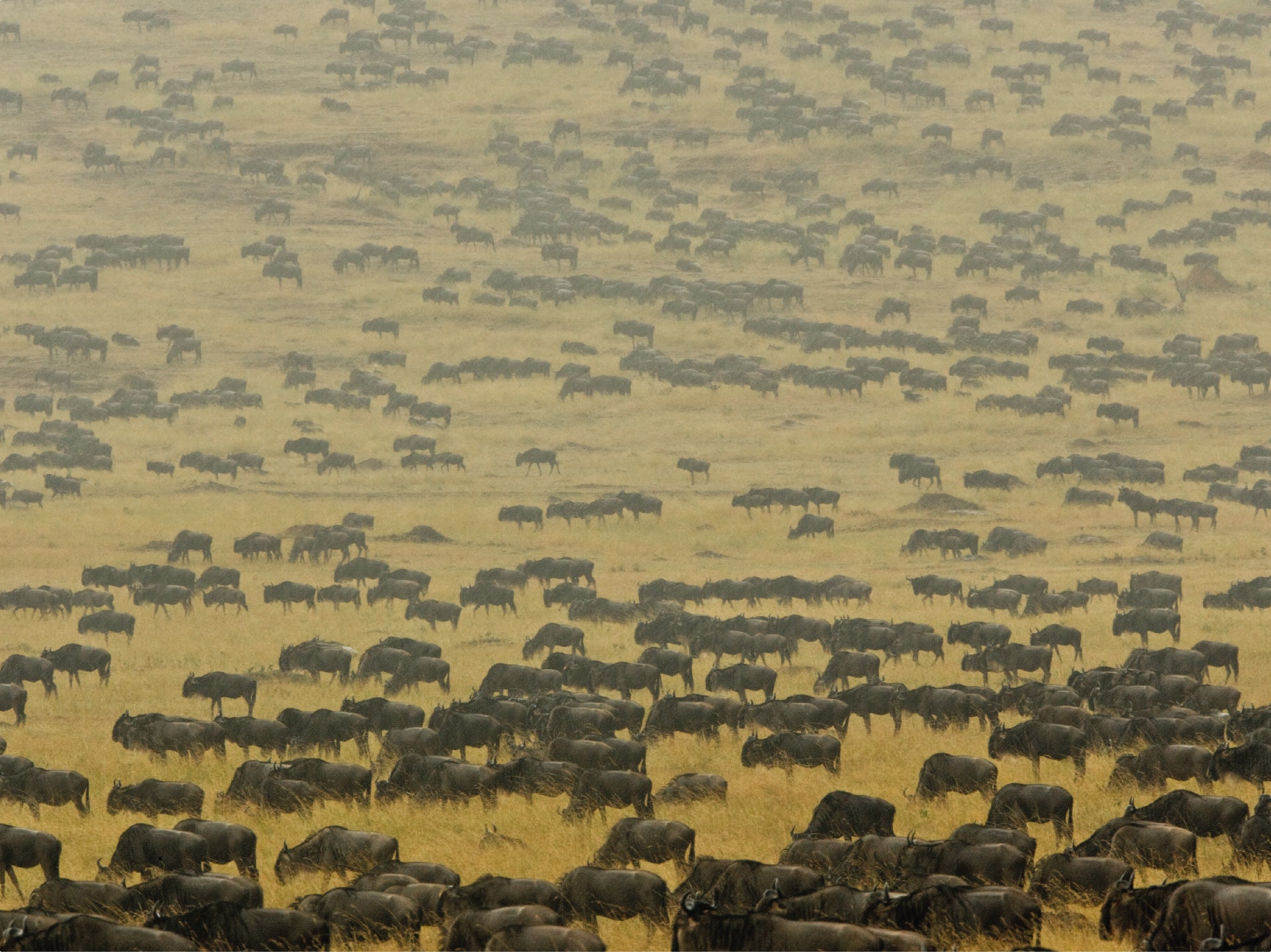
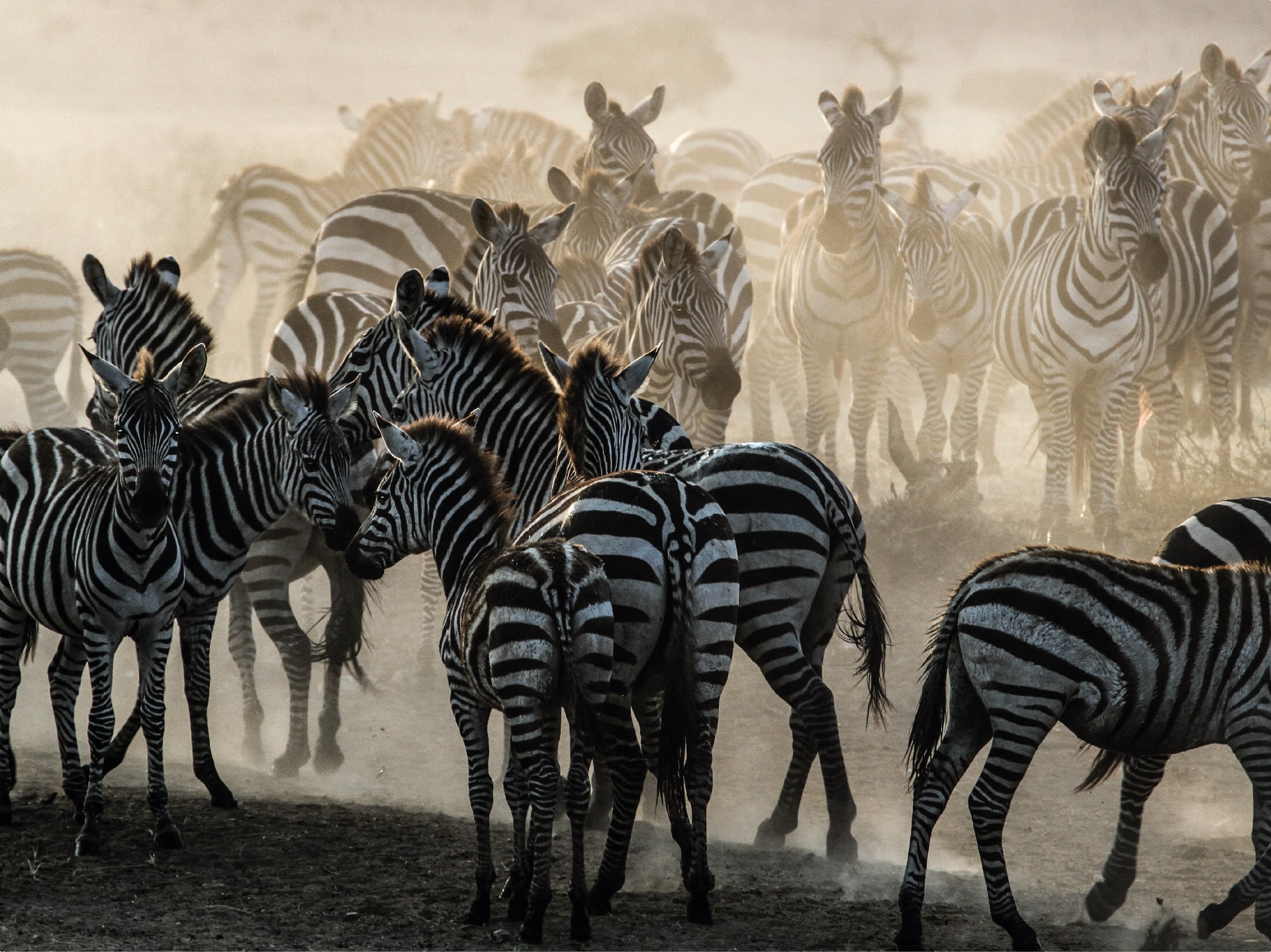
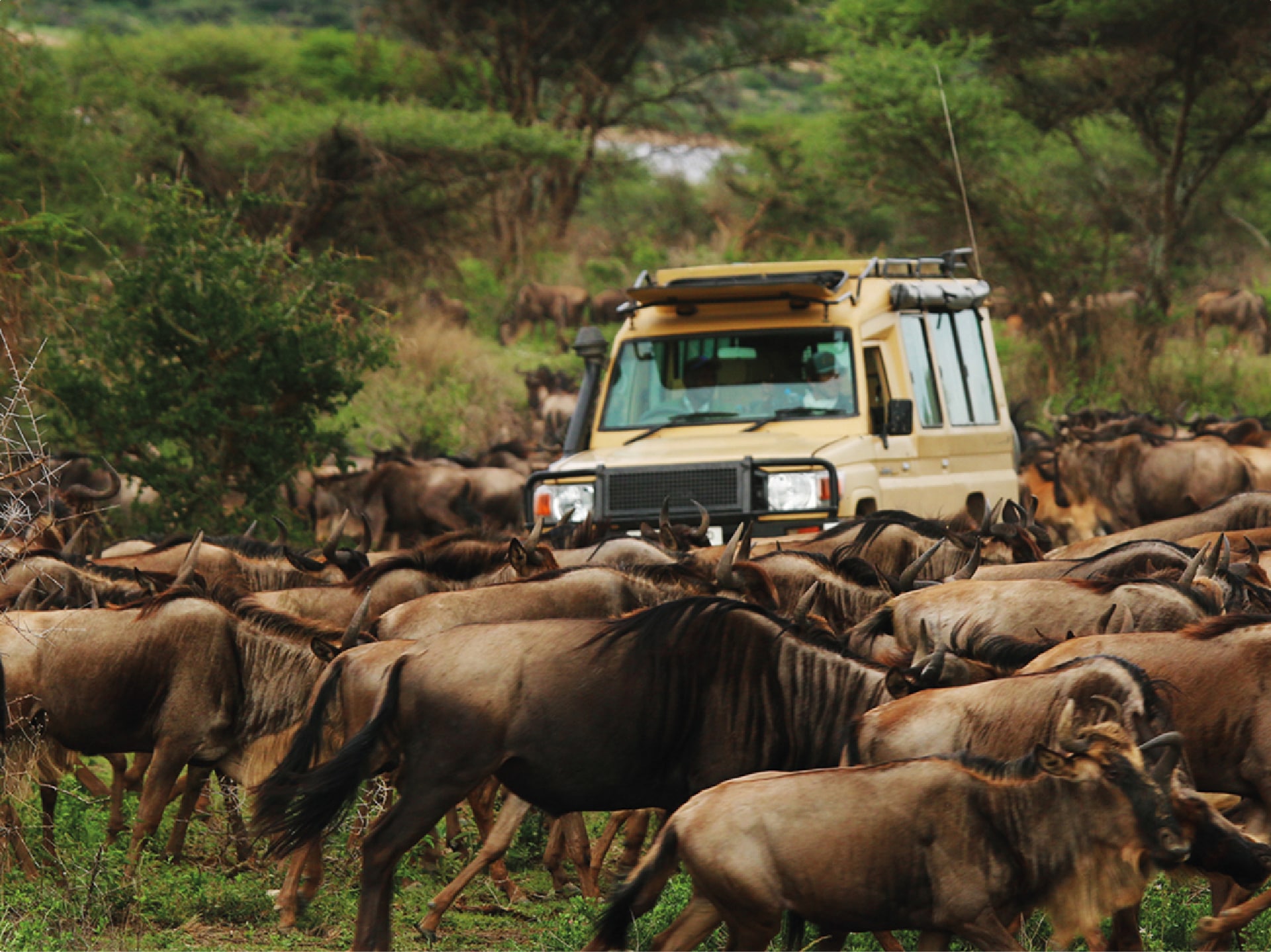
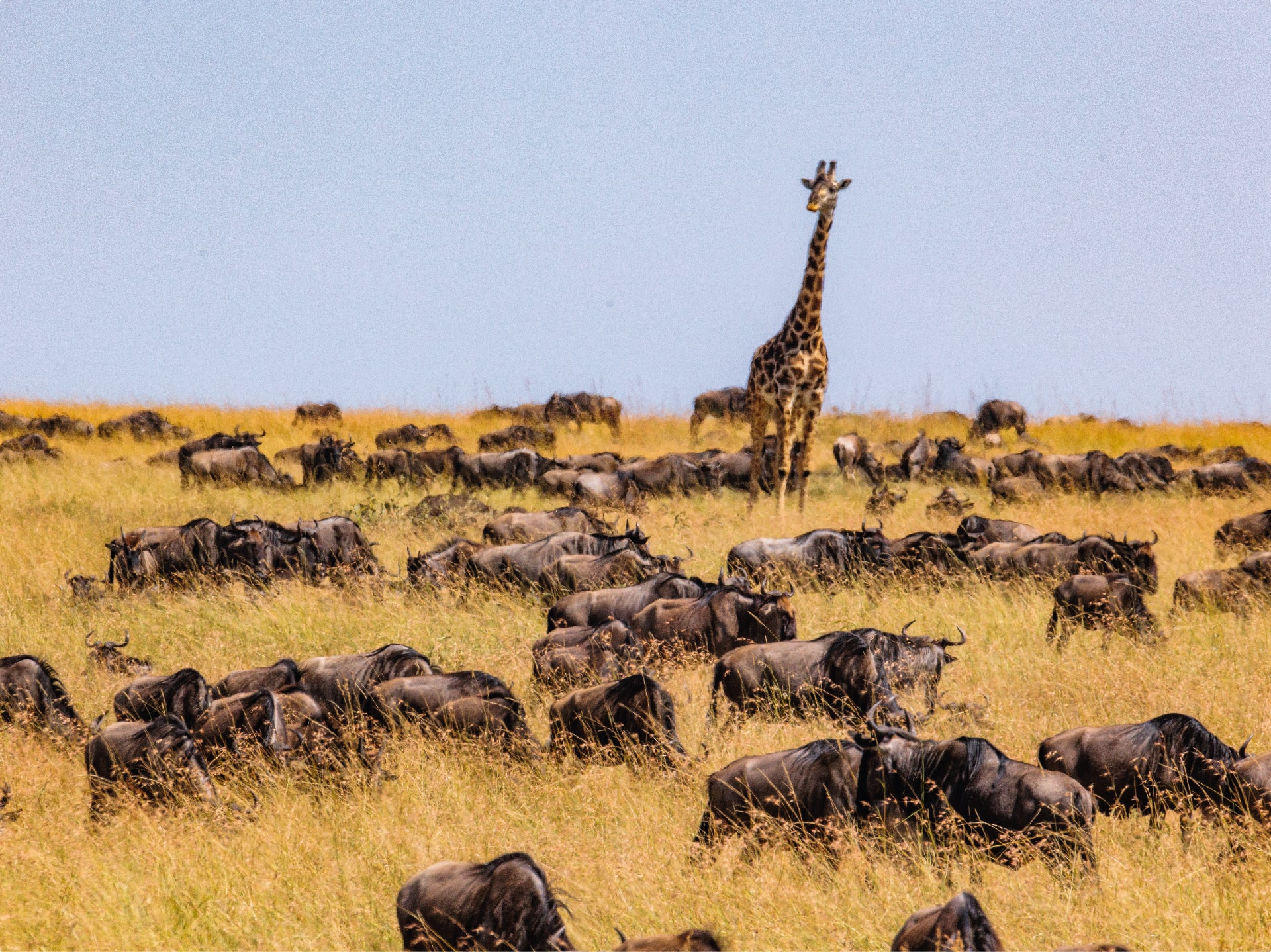
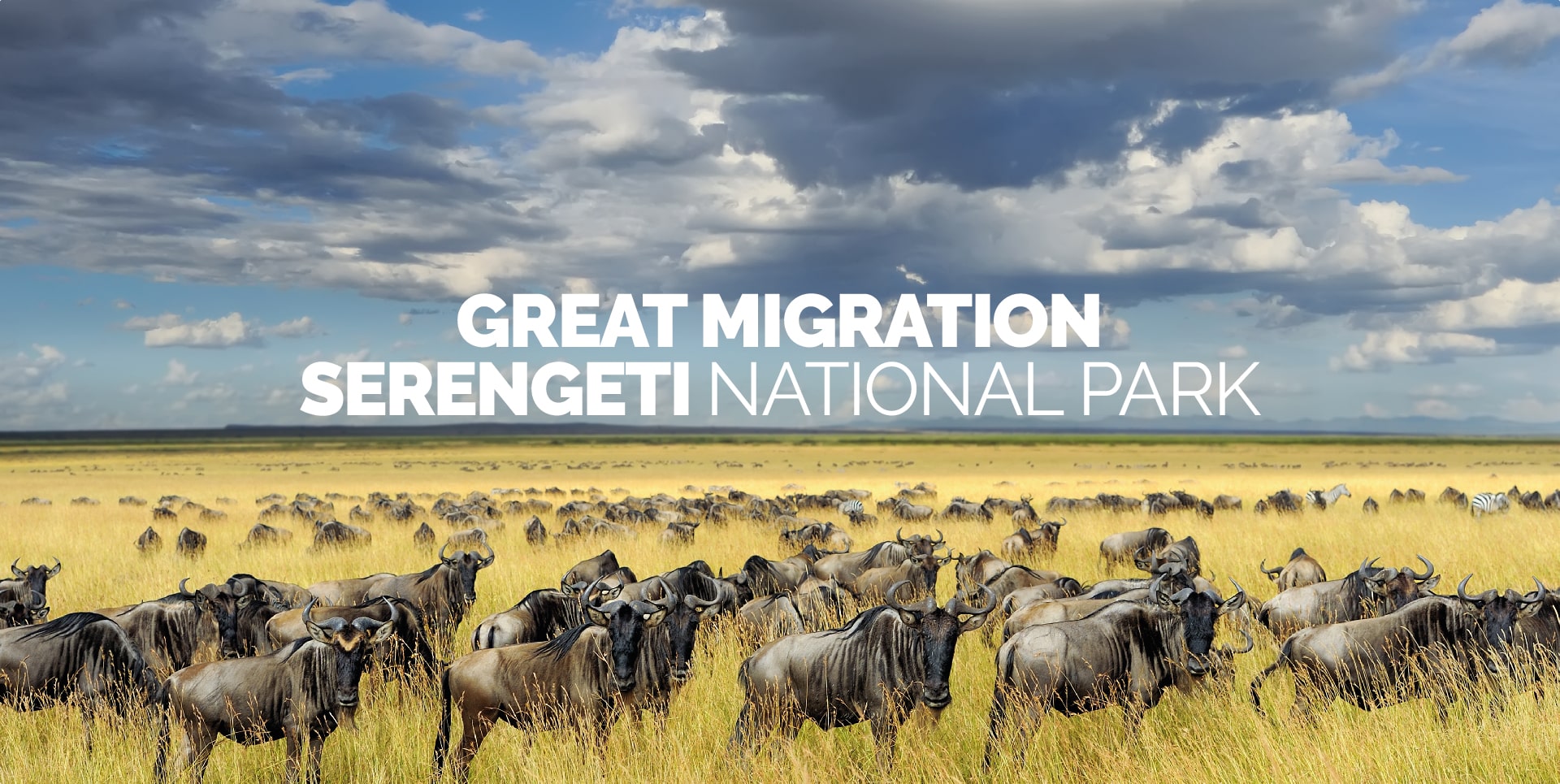
About two million animals (mostly wildebeests, zebras and Thomson’s gazelles), move en masse in search of green pastures, guided by the seasonal rains. What makes this migration unique is not only its sheer scale, but also the opportunity to observe it at different stages of the year, in different areas of the park. Each phase offers unique thrills: from gentle births in the south to dramatic river crossings in the north.
What is the Great Serengeti Migration
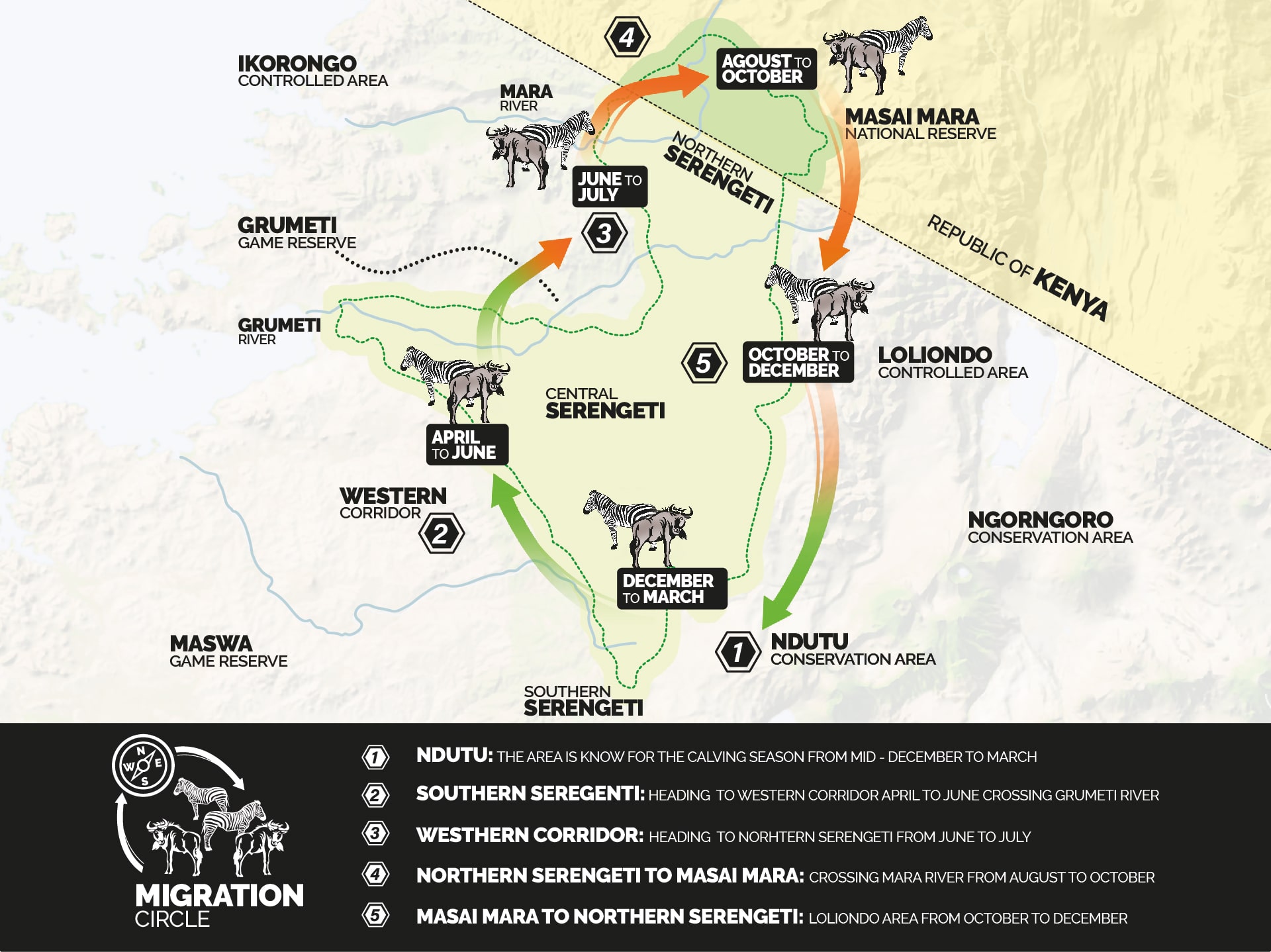
The Great Serengeti Migration is the life cycle that keeps one of the richest ecosystems on the planet in balance. More than 1.5 million wildebeests, followed by hundreds of thousands of zebras and gazelles, travel a circuit each year that stretches between Tanzania and Kenya, crossing the Serengeti National Park and the Masai Mara. Following the rhythm of the seasons and the growth of the grass, the animals move in search of food and water, facing immense natural challenges. Along the way, there is a constant flux of life and death, with predators following the herds to take advantage of the abundance of prey. Migration is more than a journey: it is an ancestral dance between survival and renewal.
In which areas of the Serengeti can you observe
The migration route in the Serengeti passes through well-defined areas that allow travellers to plan the experience according to the time of year.
January-March
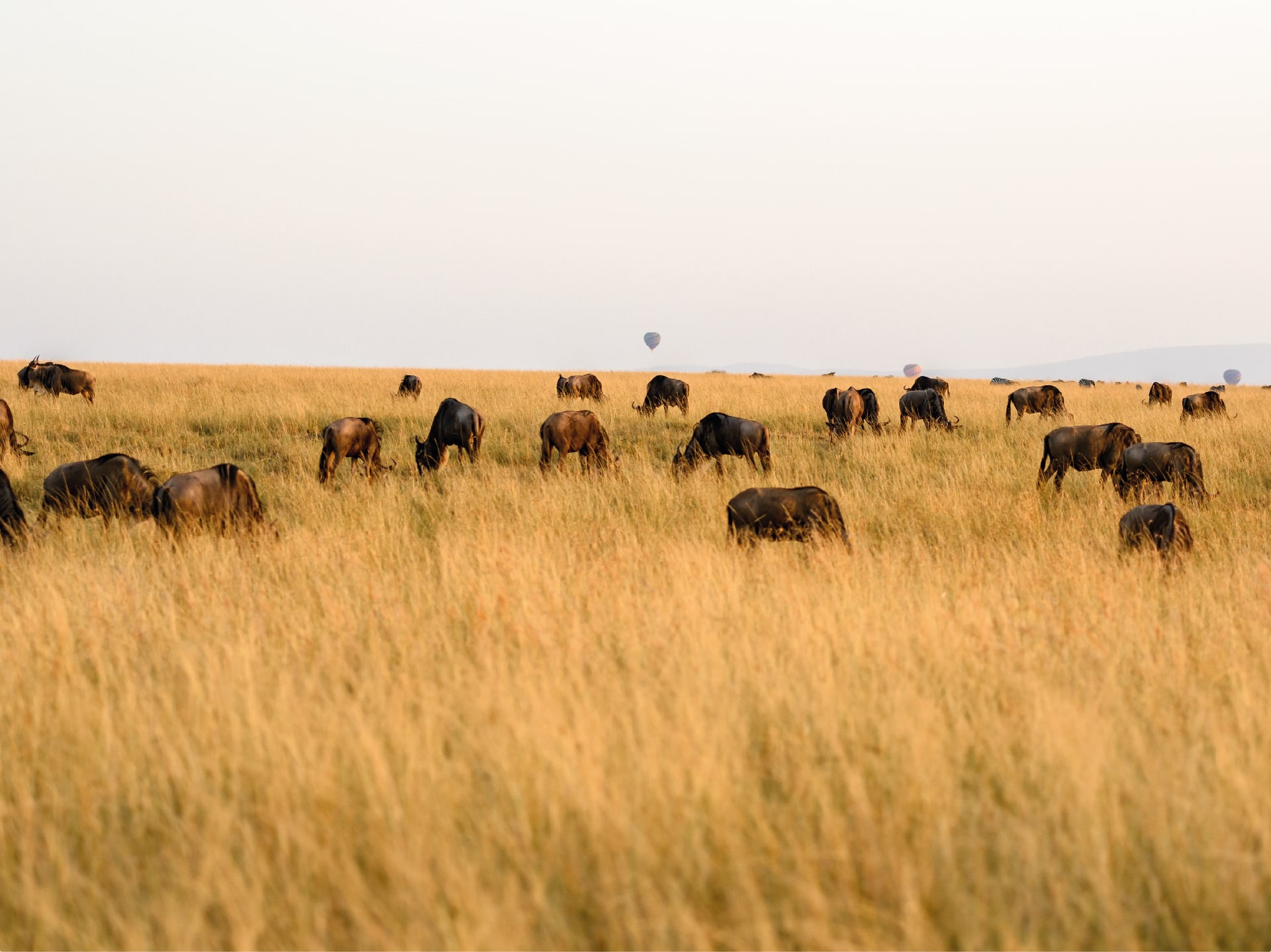
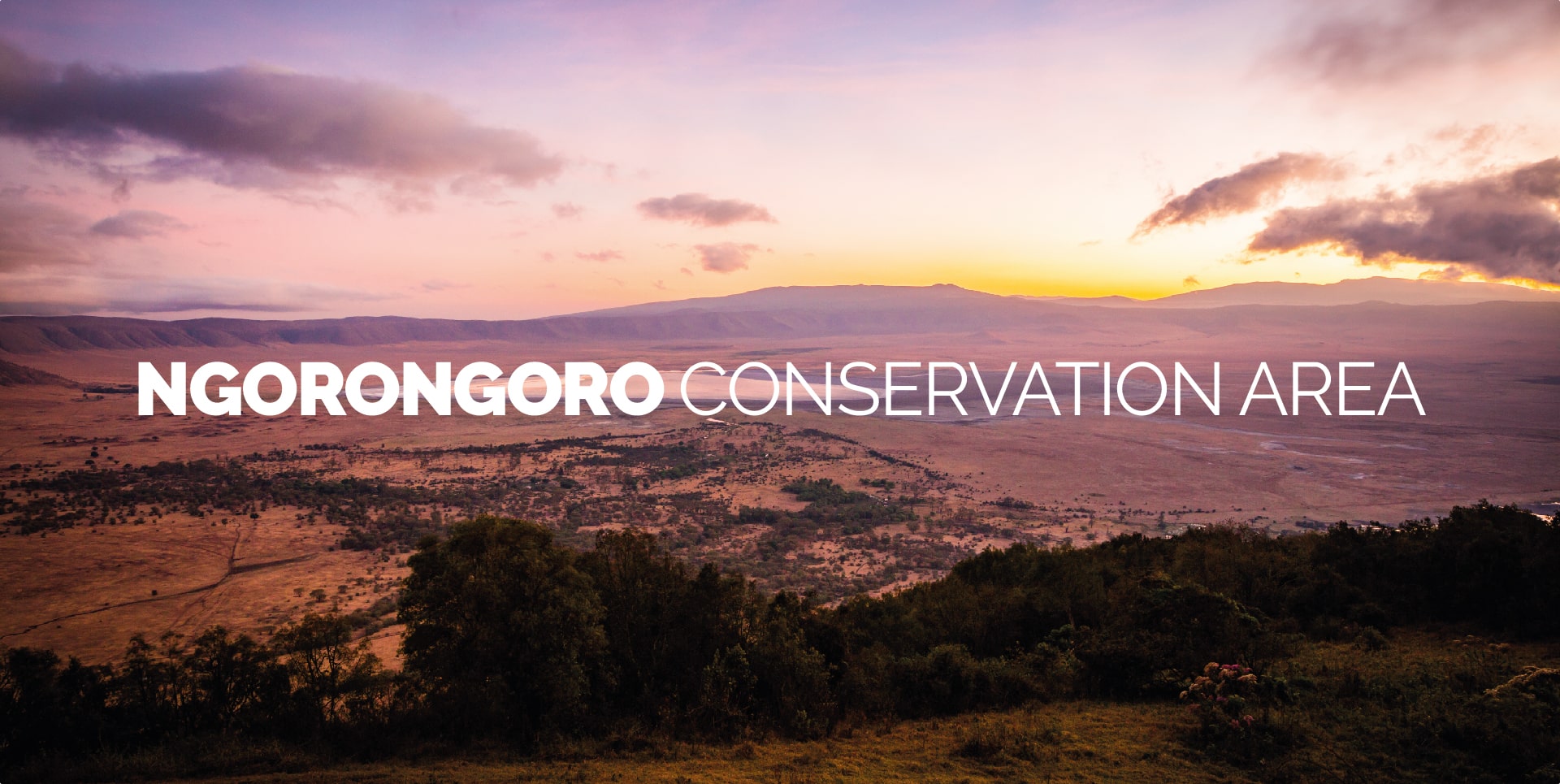
Wildebeest herds live in the low-grass, mineral-rich plains of the southern Serengeti and the western part of the Ngorongoro Conservation Area (Ndutu). During this time, you can witness the thrilling synchronized births: a brief population explosion that produces more than 8,000 calves a day before the 1,000 km (600 mile) pilgrimage begins again. The concentration of predators is also very high, attracted, of course, by an easy meal.
April
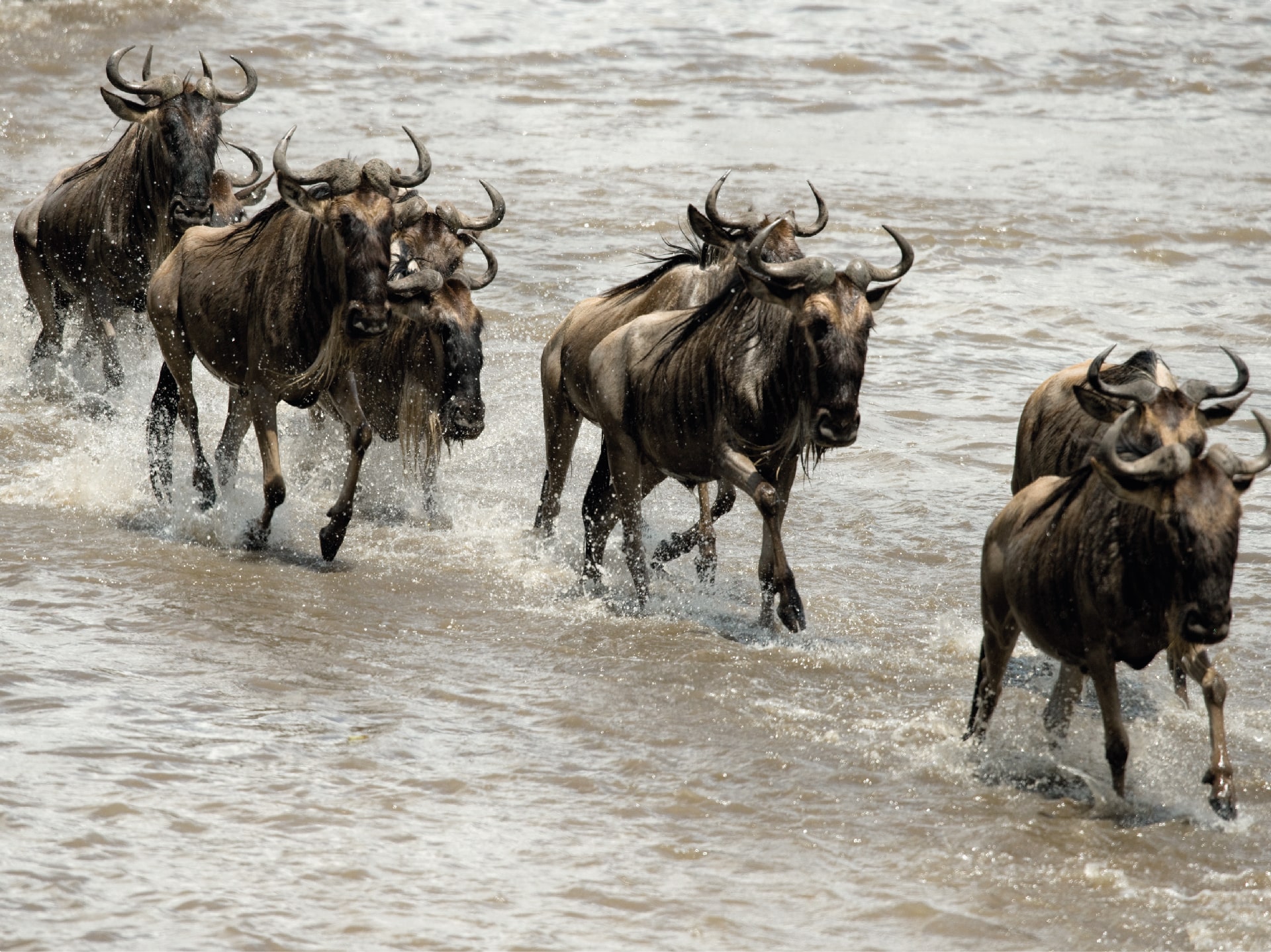
The cubs have been weaned and are ready to embark on the long journey. As the rains cease, the land dries up quickly, forcing the herds to concentrate in the few remaining green areas. Marching wildebeests and zebras migrate north-west in search of fertile pastures and new water sources to drink, forming endless lines up to 40-50 kilometres long. Behind them, tireless predators make the journeys even more exhausting and dangerous.
May
The herds stay for a short time in the lands west of Seronera. It is mating season: half a million wildebeests mate in less than a month. There are then fights between males fighting for dominance of territory and to secure the right over females.
June-July
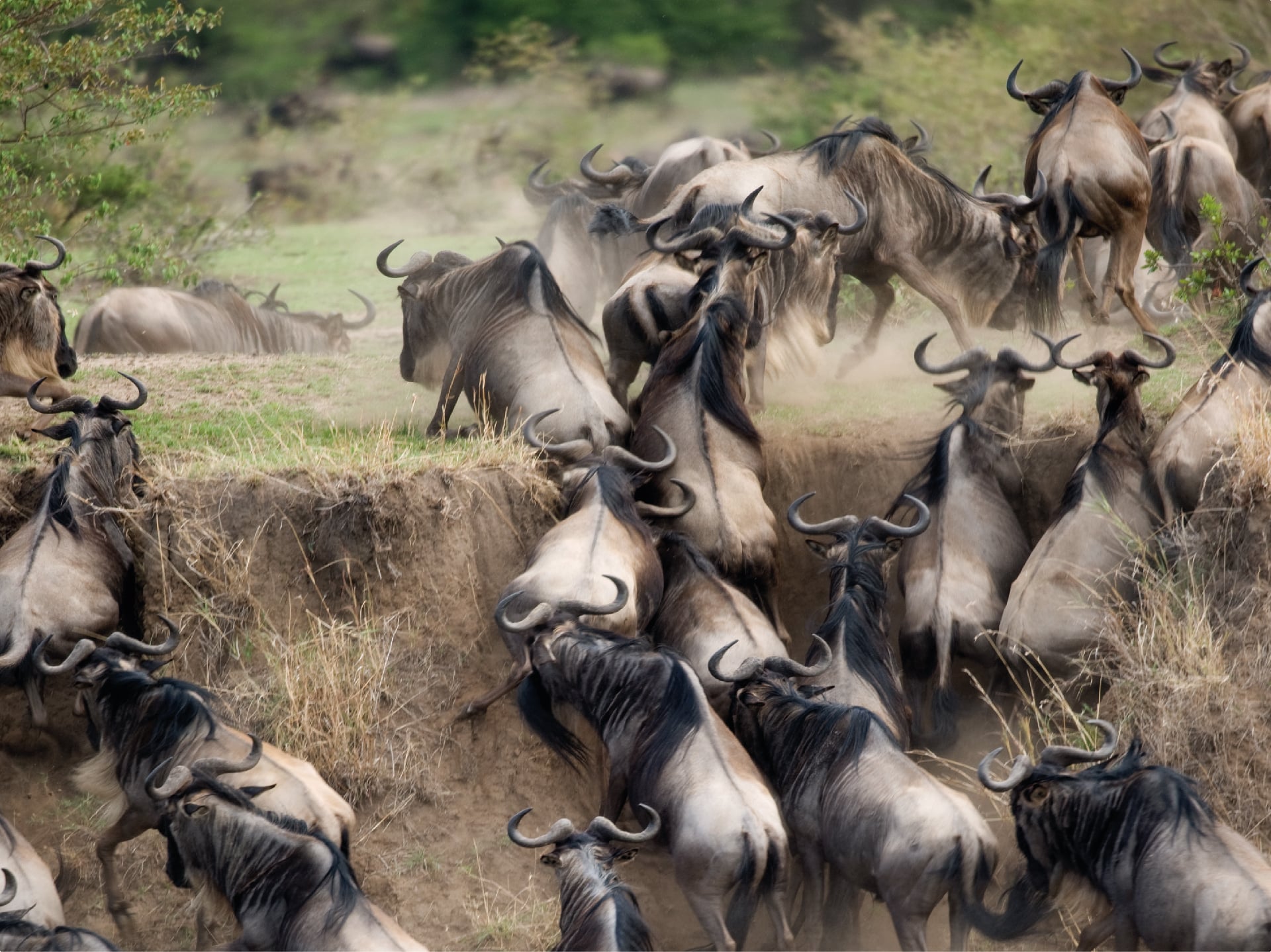
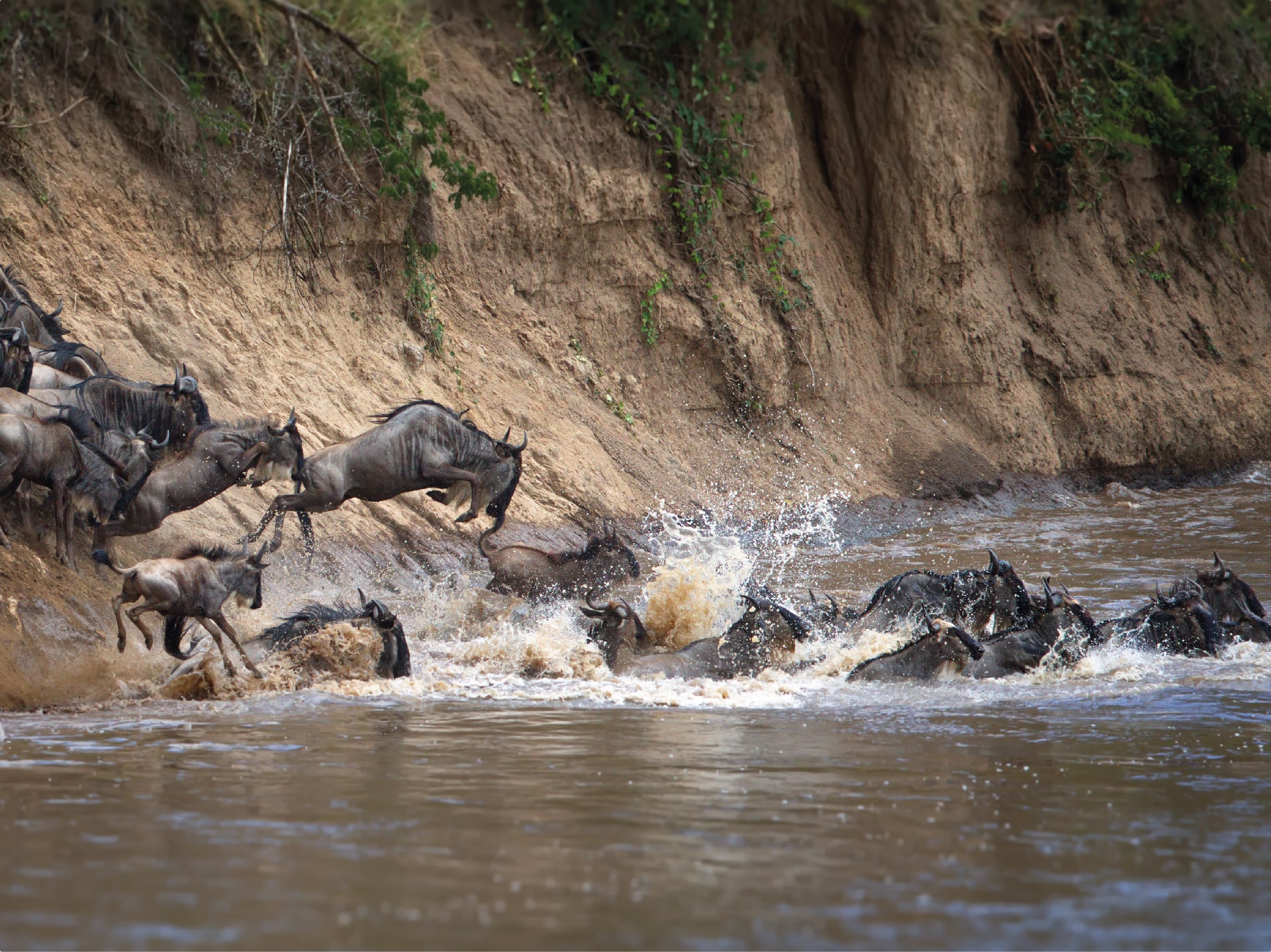
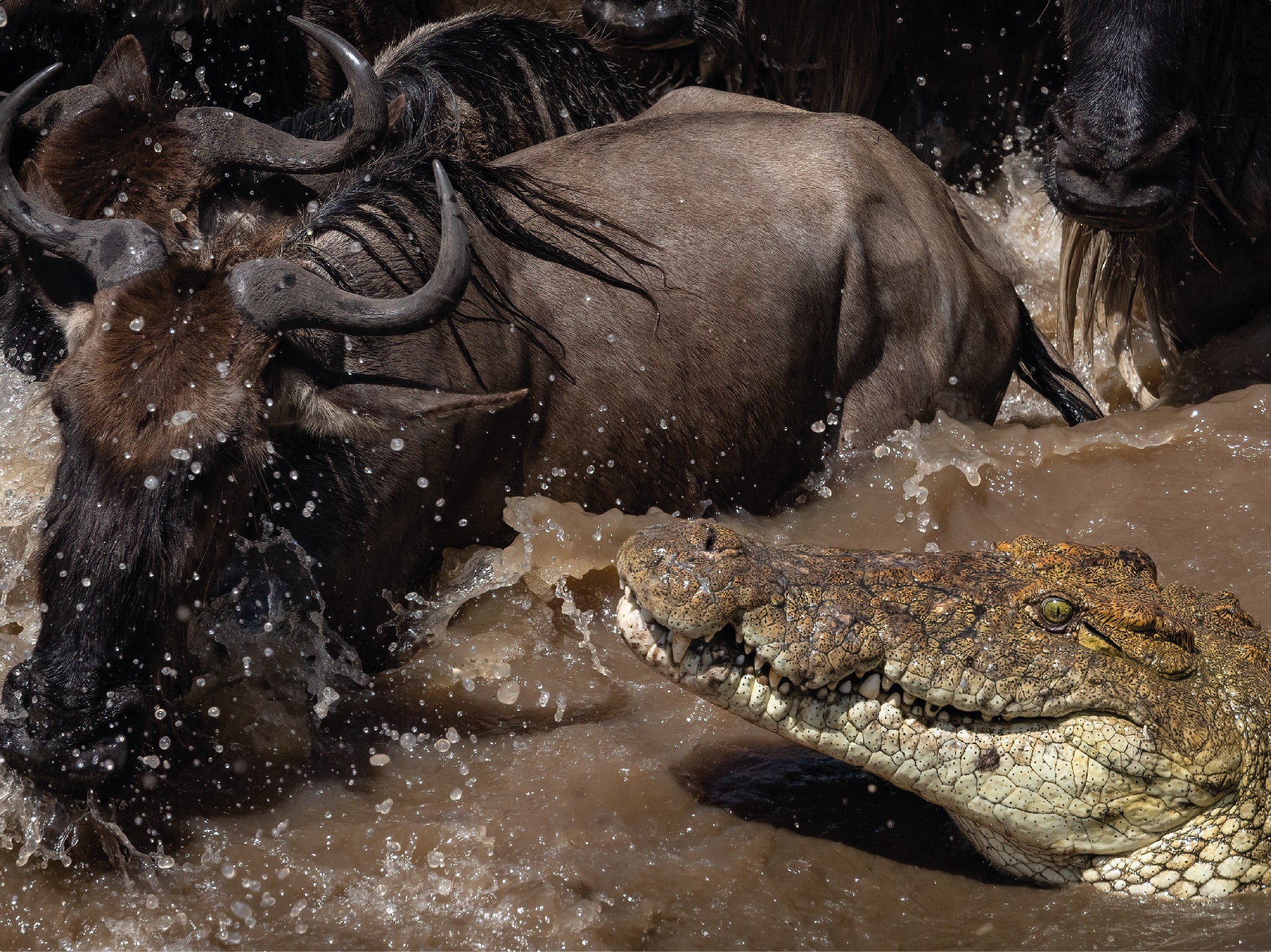
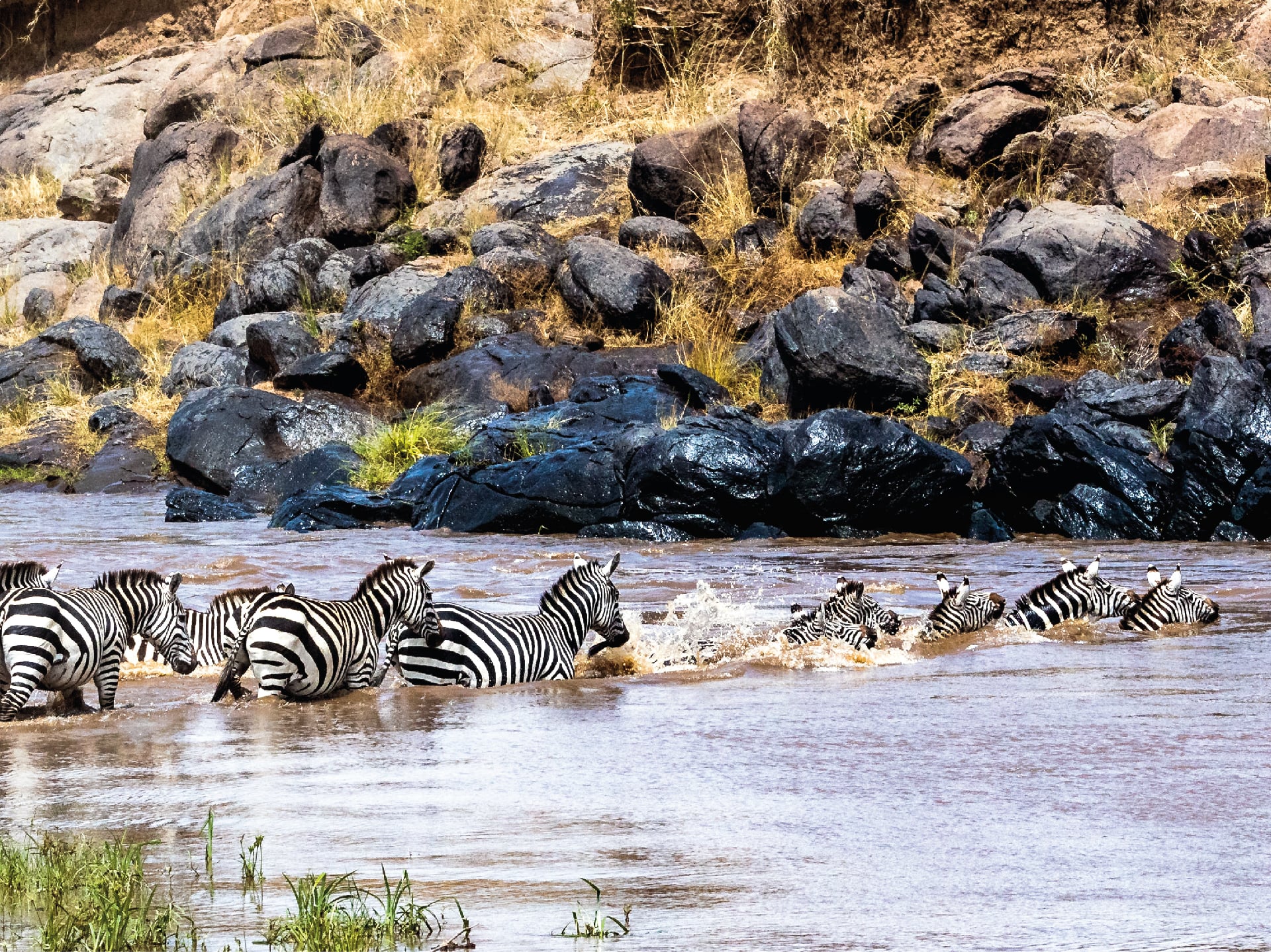
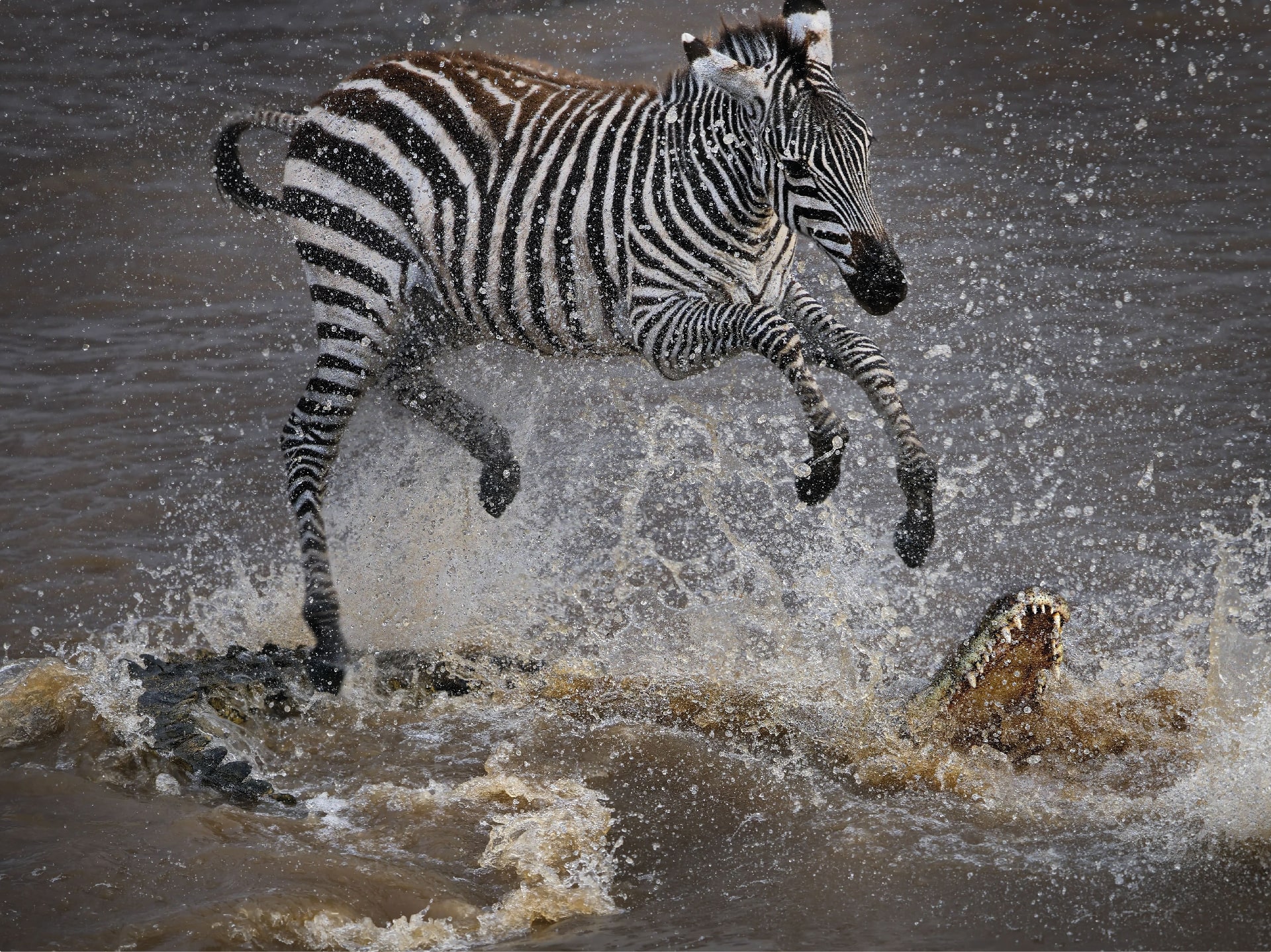
The large herds move northwards in the so-called Western Corridor, heading for the Grumeti River. This is one of the most scenic moments of the Great Migration that, at least once in a lifetime, one should witness: the famous crossing of the Grumeti River, a river with a modest water flow but infested by the ruthless Nile crocodiles. The crossing of the Grumeti is the first major obstacle the migration encounters on its way, and it happens only once and in a short time, one or two weeks.
August-October
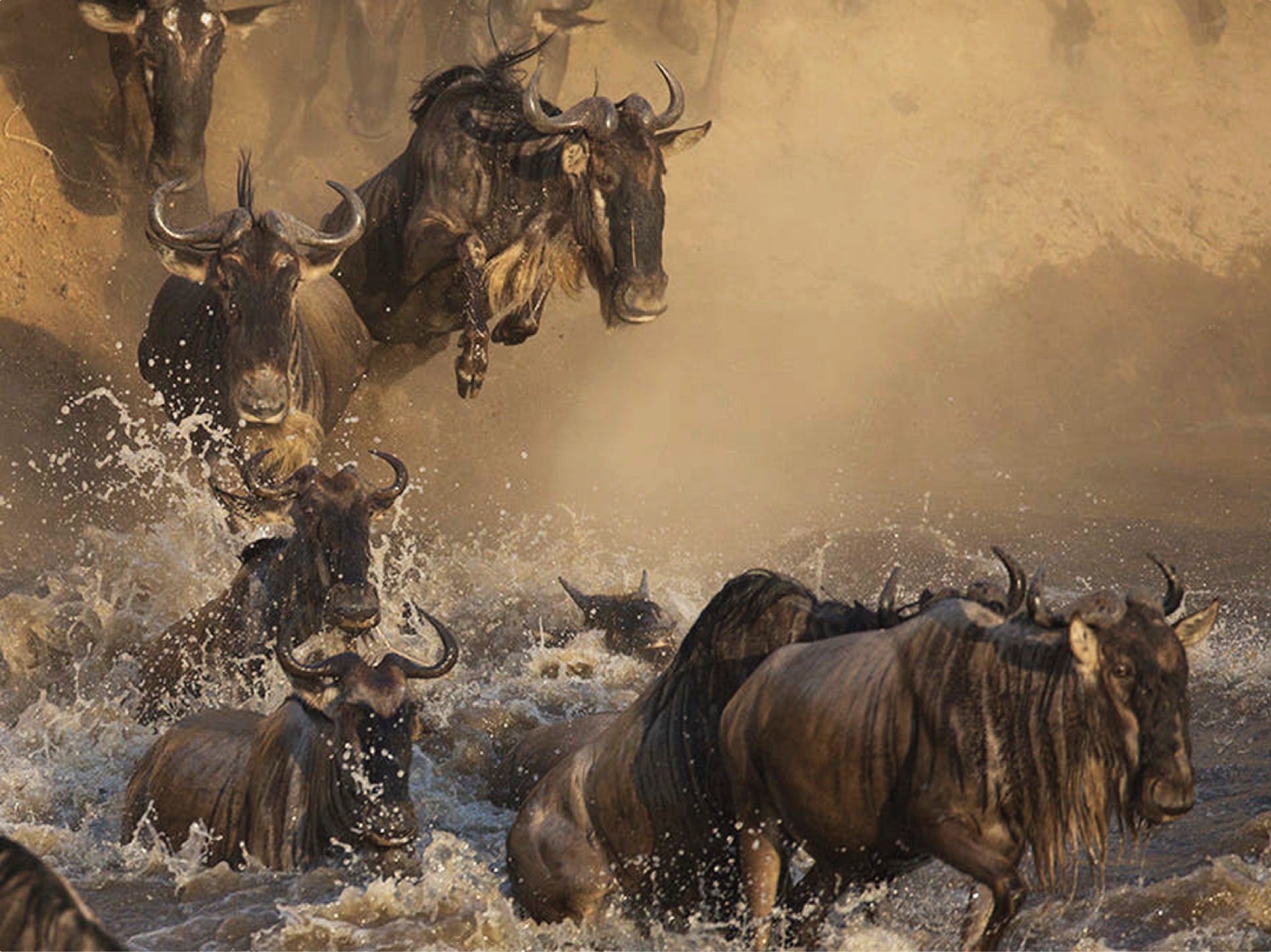
This is perhaps the most anticipated and hectic time of the year. The large herds arrive in the westernmost part of the park and cross the Mara River, leaving the Serengeti to seek water in Kenya’s Masai Mara protected area. The wildebeest and zebra congregate on the riverbank and can wait up to days before crossing it: the Mara River is in flood and many wildebeest drown due to the strong current and the high, slippery sandy banks. Once they reach the other bank, if they have escaped the jaws of the huge Nile crocodiles, they have to contend with lions and lionesses ready to attack as soon as the opportunity arises. A cruel and fascinating spectacle at the same time. It is relatively easier to spot the crossing of the Mara River than the Grumeti because the herds move back and forth between the Masai Mara and the Serengeti, always driven by the constant search for food.
November-December
The onset of the short rains marks the return of the wildebeest and zebra herds to the south of the Serengeti in search of fresh pastures. The cycle of life is preparing to begin again.
When to go to see the migration in the Serengeti
There is no single right time to experience migration in the Serengeti, but many different times, each with its own character. If you want to witness the births, the best time is between January and March. Those, on the other hand, who dream of the epic scenes of river crossings, with animals braving raging currents and predators, should aim between July and September. The intermediate months (April, May and October) are ideal for those seeking a quieter safari, away from the tourist streams.
To move easily between areas, many travellers choose fly-in safaris or mobile camps perfectly positioned along the migration routes offered by our Tanzania safari tour operator.
How the migration cycle occurs
The migration cycle is divided into three main phases, each with its own characteristics and intense appeal. The first phase is that of births, in the warm months of the south, when the savannah fills with young wildebeests that learn to walk within minutes of being born. This is followed by the movement west and north, with the great crossings of the Grumeti and Mara rivers, moments when the tension is high and every jump into the water is a risk. The last stage, perhaps the least spectacular but among the most fascinating, is the return to the south, a long, silent walk that closes the circle and reopens a new cycle of life.
Predators and the life cycle
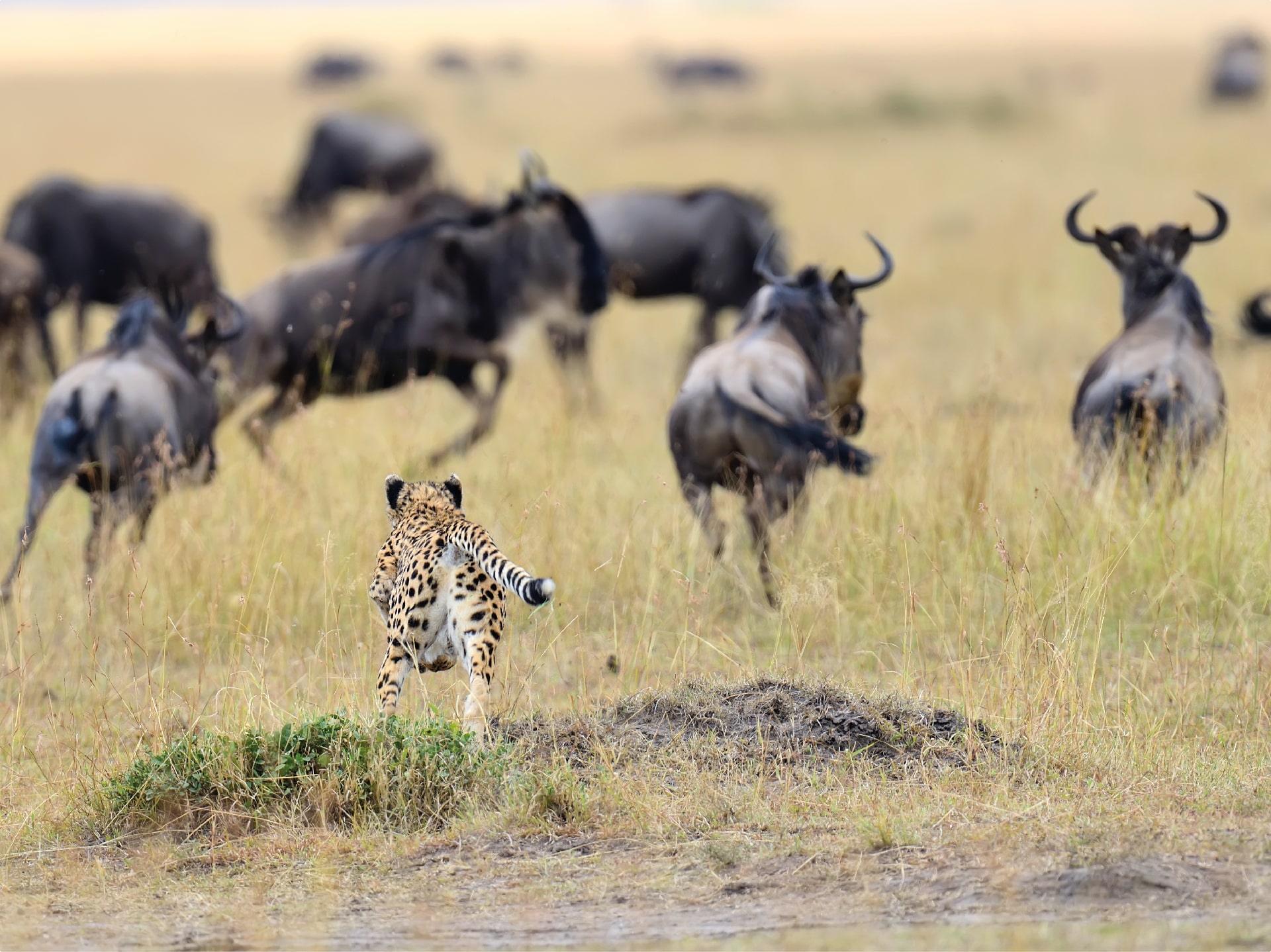
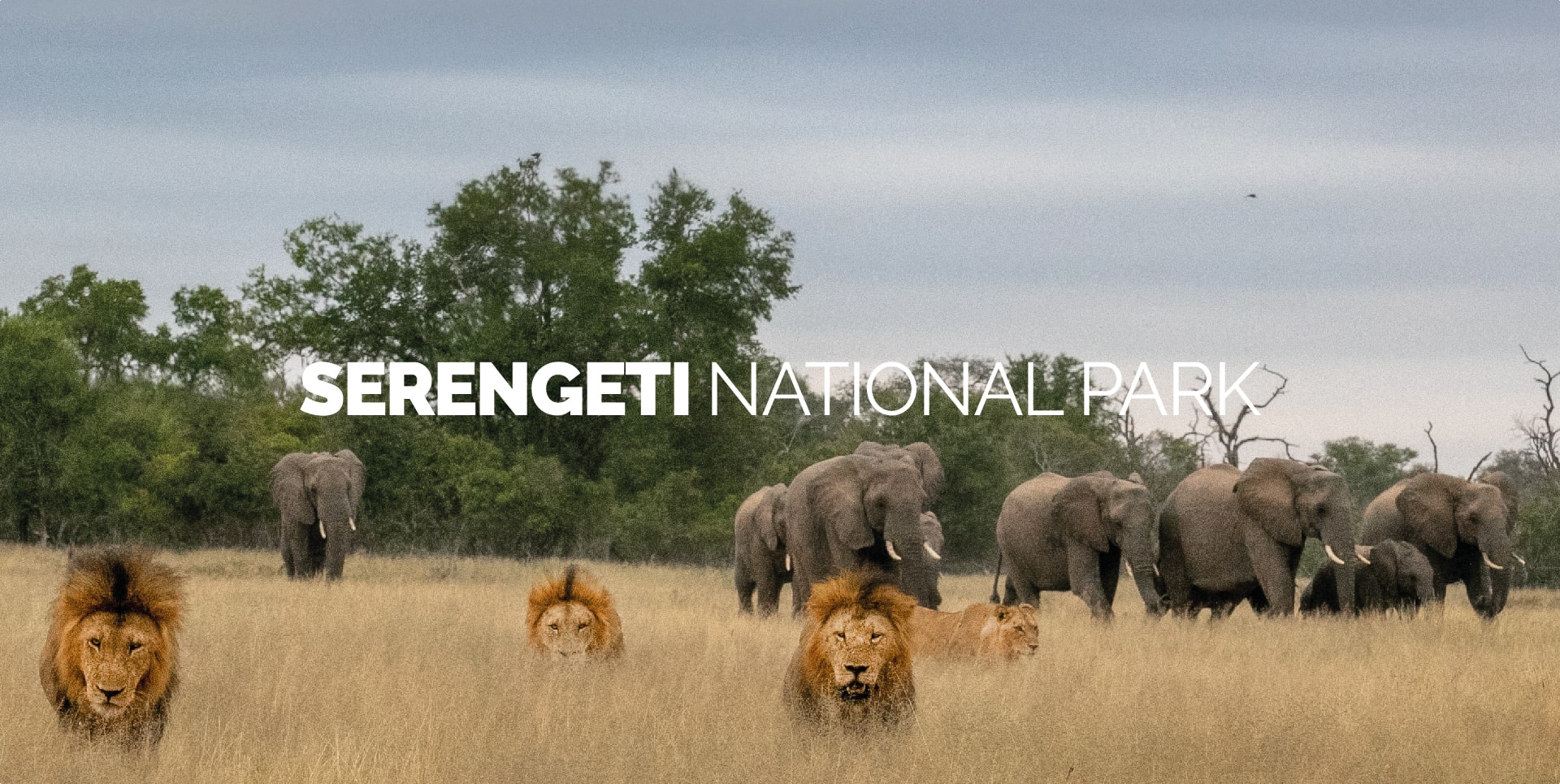
The movement of millions of animals inevitably attracts the large predators of the savannah. Lions, cheetahs, hyenas and crocodiles follow the herds, ready to take advantage of any distraction or weakness. The Great Serengeti Migration is also this: a powerful balance between prey and predators, where every moment can decide the fate of a life. Seeing an attack, or even just sensing the tension at a distance, is one of the most authentic and raw experiences nature has to offer. Yet even in the brutality of the hunt, a profound sense of harmony emerges.
How to organise a safari to see the migration
Planning a safari in Tanzania the Great Migration requires care and some advance planning. The most attractive accommodations, such as mobile camps in strategic areas, fill up quickly, especially during key periods.
For this reason, it is advisable to rely on experienced operators such as Tracks of Africa, who know the timing of the migration and can guarantee access to the best viewing locations. Some prefer fixed lodges, others opt for the more immersive, itinerant tented camps. Whatever the choice, it is essential that the trip is tailor-made according to the phases of the migration.
Recommended activities during the migration safari
During a safari in Tanzania, the emotions do not end with just the observation of the animals. The activities are many and designed to amplify the experience. The game drives at sunrise and sunset allow you to capture moments of rare beauty, when the light sculpts the landscape and the animals are most active. Hot air balloon safaris, on the other hand, offer a unique aerial perspective, with boundless views and the impression of flying over a documentary. For lovers of nature photography, every moment is a potential unforgettable shot: the light, the colors, the dynamic scenes lend themselves to real works of art.
To whom this experience is recommended
Migration to the Serengeti is an experience for everyone, but particularly recommended for those who feel the call of adventure and authentic nature. It is ideal for those approaching the African continent for the first time, but also for more experienced travellers who wish to witness a unique event. Professional and amateur photographers alike will find this setting an inexhaustible paradise. But families, thrill-seeking couples or solitary explorers can also experience profound moments of connection with something ancestral.
An event beyond imagination
To witness migration in the Serengeti is to experience something that goes beyond the wildlife aspect. It is to immerse oneself in a suspended time, where the rhythm of nature dominates everything, and man returns to being a mere observer.
The pounding of hooves on the ground, the rustle of trampled grass, the calls of animals and the vast silence of the savannah awaken dormant emotions. It is a journey into the beating heart of the Earth, which remains in the memory like a vivid and real dream. It is not just a safari, it is a return to the origins, to a world where every day tells an ancient and powerful story.