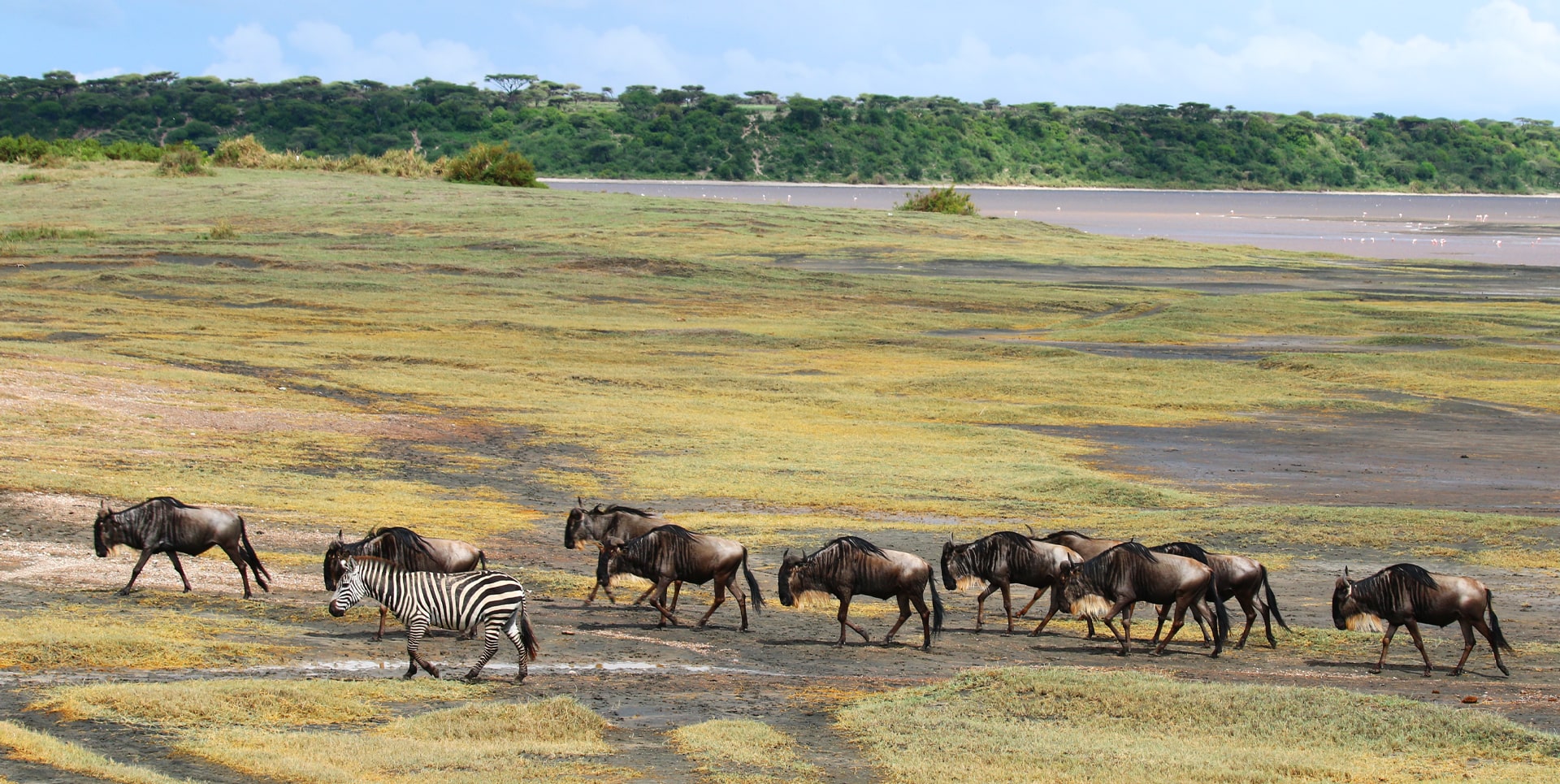
In the heart of East Africa, one of the most spectacular shows on the planet takes place every year: the Great Migration in Tanzania. Millions of wild animals cross plains, rivers and savannahs in search of lush pastures, giving life to a cyclical dance that represents the purest and most powerful essence of nature.
Understanding this unique phenomenon means immersing yourself in the very spirit of the African savannah: a perfect balance between life, death and rebirth. For those who dream of an unforgettable safari, knowing the times and places of this epic event is essential to experiencing it at the right moment.
To plan a tailor-made itinerary, you can rely on Tracks of Africa, a tour operator specialising in safaris in Tanzania, which organises expeditions throughout the year, following the migration routes.
What is the Great Migration and why is it a unique event?
The Great Migration in Tanzania is considered the largest land movement of animals in the world. Every year, over two million herbivores — mainly wildebeests, zebras and Thomson’s gazelles — travel a migratory loop of about 800 kilometres between the Serengeti National Park and the Masai Mara in Kenya, also crossing the famous Ngorongoro Conservation Area.
This continuous flow follows the rhythms of nature: with the arrival of the dry season, animals move north in search of water and fresh pastures; with the rains, they return south, where the grassy expanses offer abundant nourishment.
It is a journey driven by hunger, thirst and the instinct for survival, but also by the need to reproduce: between January and March, during the so-called calving season, hundreds of thousands of calves are born, which immediately join the collective march.
Where to see the Great Migration: iconic locations
Witnessing this phenomenon requires being in the right place at the right time. The movements of the herds follow a relatively predictable annual cycle and encompass some of the most iconic natural areas in East Africa.
The heart of the migration lies in the Serengeti, with its endless plains and vast skies, the setting for epic encounters between predators and prey. To the south, the region around Lakes Ndutu and Masek — on the edge of the Ngorongoro Conservation Area — is the scene of mass births between January and February, when female wildebeest choose these mineral-rich grounds to give birth.
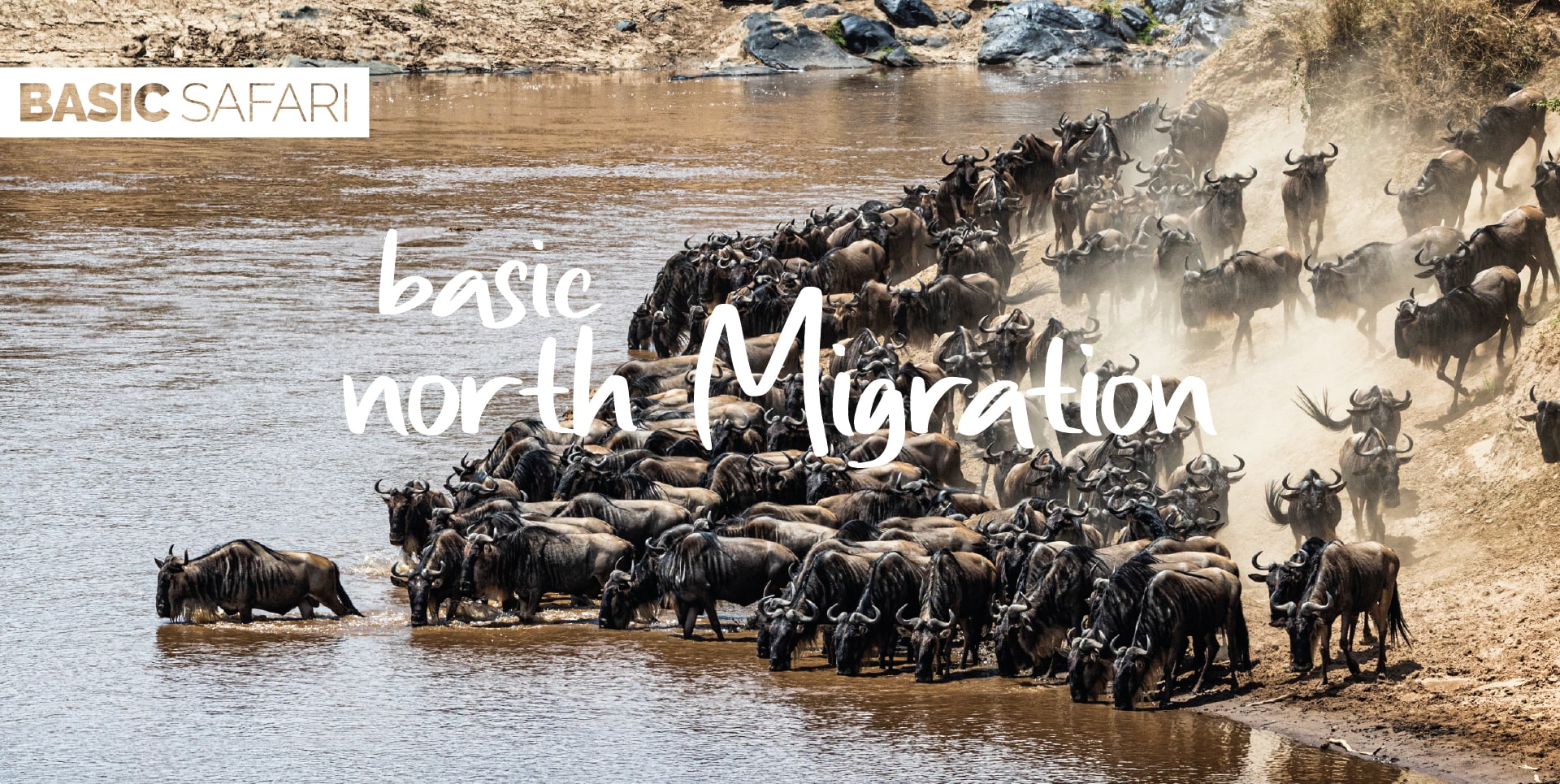
As the season progresses, the herds move west along the Grumeti corridor, where the rivers teem with waiting crocodiles, and finally north to the Mara River on the Kenyan border, where the herds face one of the most spectacular and dramatic passages of the entire migration.
The month-by-month calendar of the Great Migration
The Great Migration follows a circular route that spans the entire year. Knowing when and where to see the Great Migration is crucial for planning a safari that allows you to observe the most exciting scenes.
From January to March, the herds are found in the southern plains of the Serengeti and near Lake Ndutu and Lake Masek. This is the birthing season: hundreds of thousands of young wildebeests populate the grassy plains, while predators lurk on the edges. The mineral-rich volcanic soil provides mothers with ideal nutrition for nursing.
Between April and May, with the arrival of the rains, the herds begin to move westward, crossing the central Serengeti and the Seronera Valley. Even the weaned calves take part in the journey, followed by lions, cheetahs and hyenas. The rains make the landscapes lush and spectacular, but some areas can become difficult to access.
In June and July, the flow concentrates in the western corridor of the Serengeti, along the Grumeti River. Here you can witness spectacular river crossings, with Nile crocodiles lying in wait for their prey. It is a moment of great tension and drama, one of the most sought-after by photographers and travellers.
During August and September, the herds reach the northern Serengeti and the Mara River. This is perhaps the most iconic moment: the animals must face the crossing between Tanzania and Kenya, with strong currents and predators lurking on the banks. The images of thousands of wildebeests plunging into the river are among the most famous of African wildlife.
From October to November, with the onset of the light rains, the herds begin to return south, crossing the Lobo and Klein’s Valley regions in the north-eastern Serengeti, before heading back to the heart of the Serengeti. The pastures turn green again and the march resumes, closing the circle of migration.
Finally, in December, the first vanguards reach the Ndutu and Masek area again, preparing for the new birthing season and the beginning of another eternal cycle.
Animals that migrate
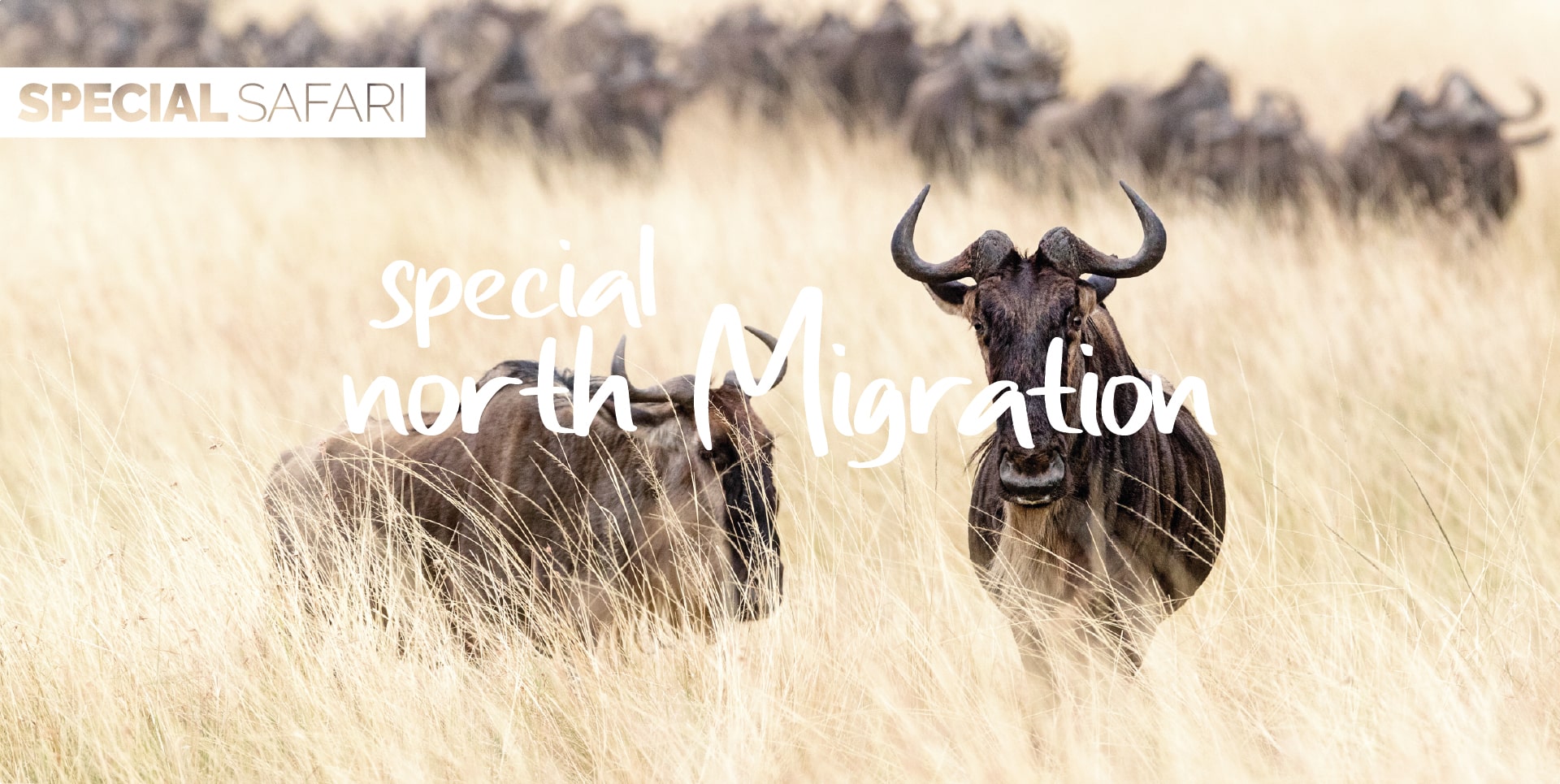
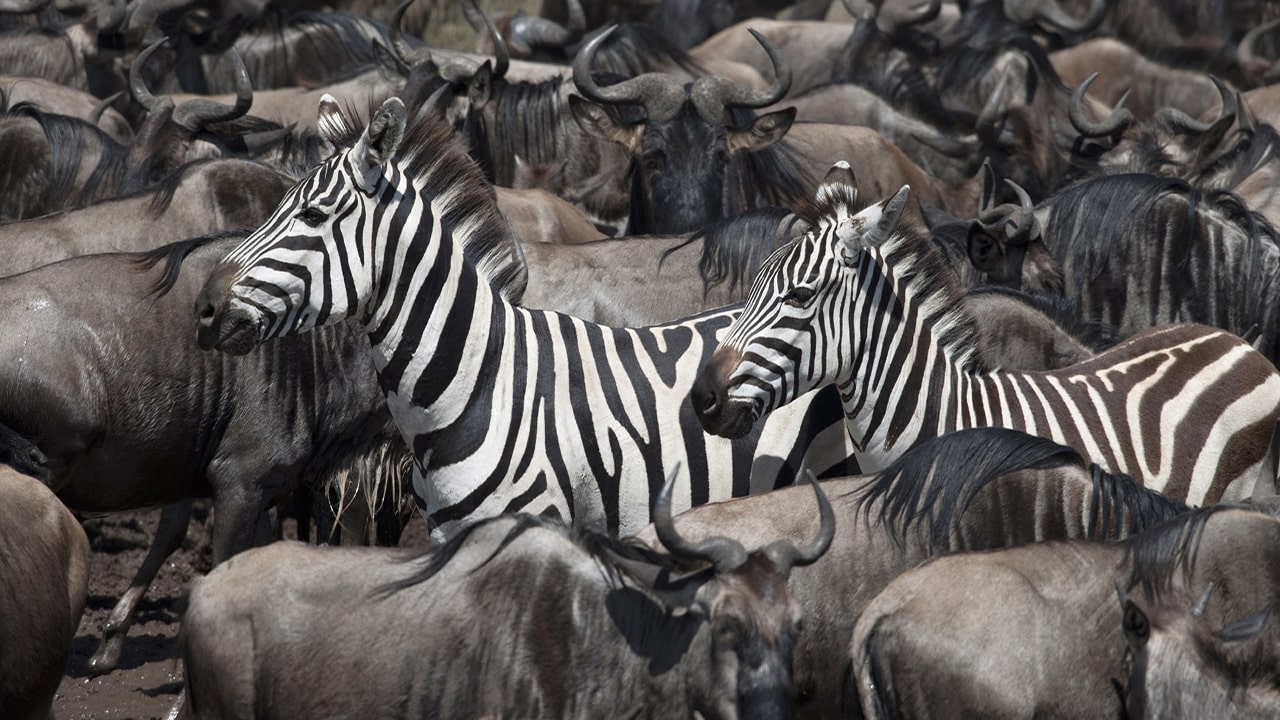
The Great Migration in Tanzania is dominated by around two million wildebeests, true symbols of this epic journey. They are accompanied by over 300,000 zebras and 400,000 Thomson’s gazelles, followed by a myriad of other herbivores and, of course, Africa’s great predators.
Zebras often lead the way, grazing on tall grass and leaving the tenderest grass for the wildebeests that follow them; gazelles bring up the rear. All around, lions, cheetahs, leopards and hyenas wait for any opportunity to hunt, while vultures and marabou storks fly over the savannah waiting for the remains. It is a natural balance that is both fascinating and cruel at the same time, testifying to the resilience and strength of these wild species.
Those wishing to witness these scenes in the best possible conditions can opt for a safari in Tanzania that includes stops in the various ecosystems of the Serengeti, following the migration route closely.
The symbolic areas of the Great Migration
The migration route covers some of the most famous protected areas in East Africa. The Serengeti National Park, a UNESCO World Heritage Site, is the beating heart of this phenomenon and offers boundless views, ideal for unforgettable sightings.
Further north, the Mara River marks the natural border with Kenya and is home to spectacular crossings between August and September, while to the west, the Grumeti River is a crucial stop during the summer journey.
Organising a safari to witness the Great Migration allows you to explore all these habitats, witnessing different stages of the migration depending on the season you choose, and thus enjoy a comprehensive and immersive experience.
A journey that reveals the essence of Africa
Witnessing the Great Migration in Tanzania is not just about seeing animals on the move: it is about experiencing one of the oldest and most powerful natural rituals on the planet. Every step, every river crossing, every birth on the plains carries with it millions of years of evolution and resilience.
Carefully planning your trip, choosing the right times and areas, allows you to witness one of the most exciting spectacles that Earth has to offer. It is an experience that leaves its mark and teaches, more than anything else, how fragile and precious the balance of African wildlife is.