The Great Wildebeest Migration is a natural spectacle that defies human imagination in its scale and intensity. Over two million herbivores move en masse across the endless plains of Tanzania, creating what many consider to be the most extraordinary natural event on the planet. Choosing a Tanzania safari dedicated to this phenomenon means immersing yourself in the beating heart of the African wilderness at its most vibrant and dramatic time.
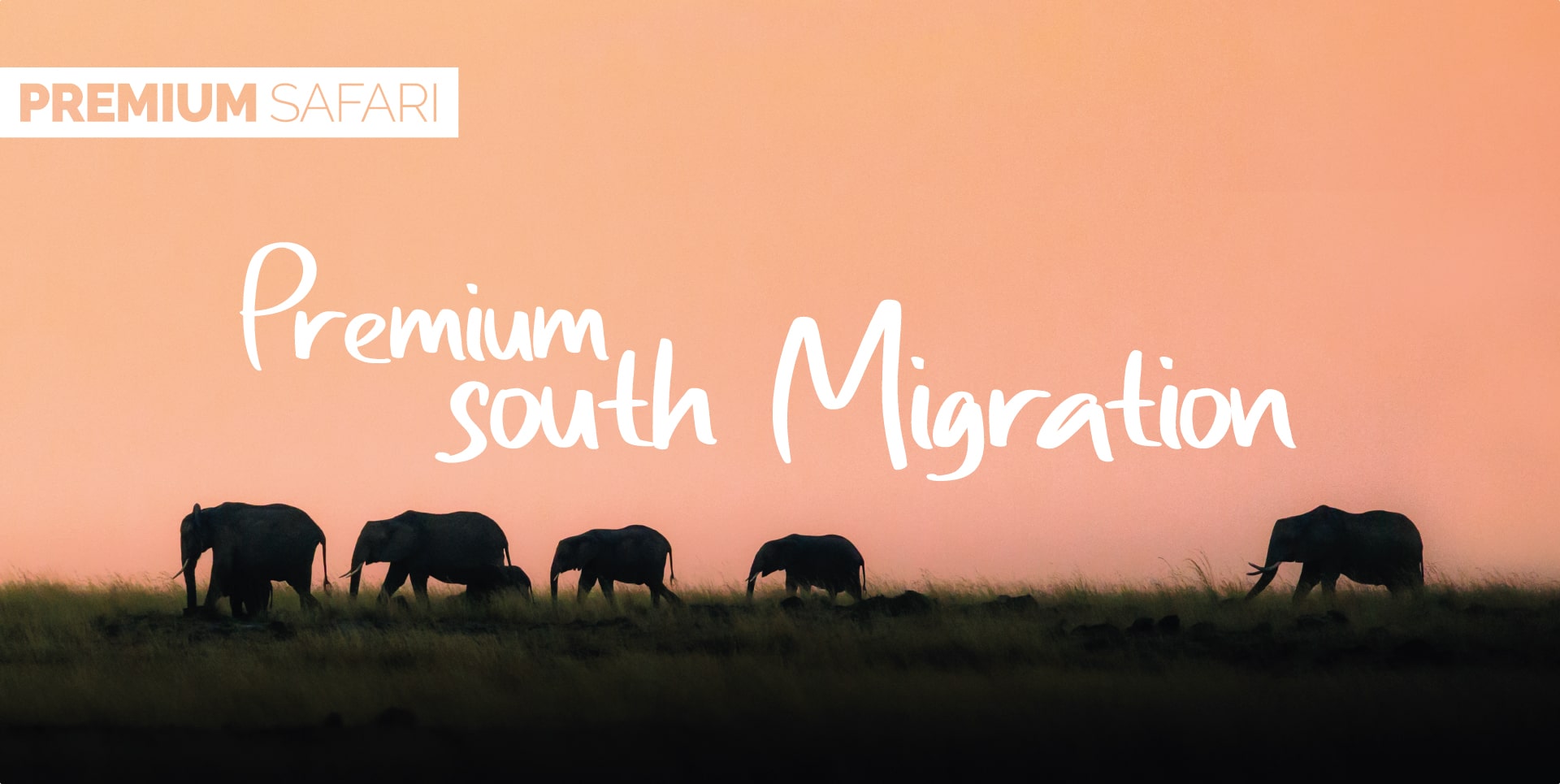
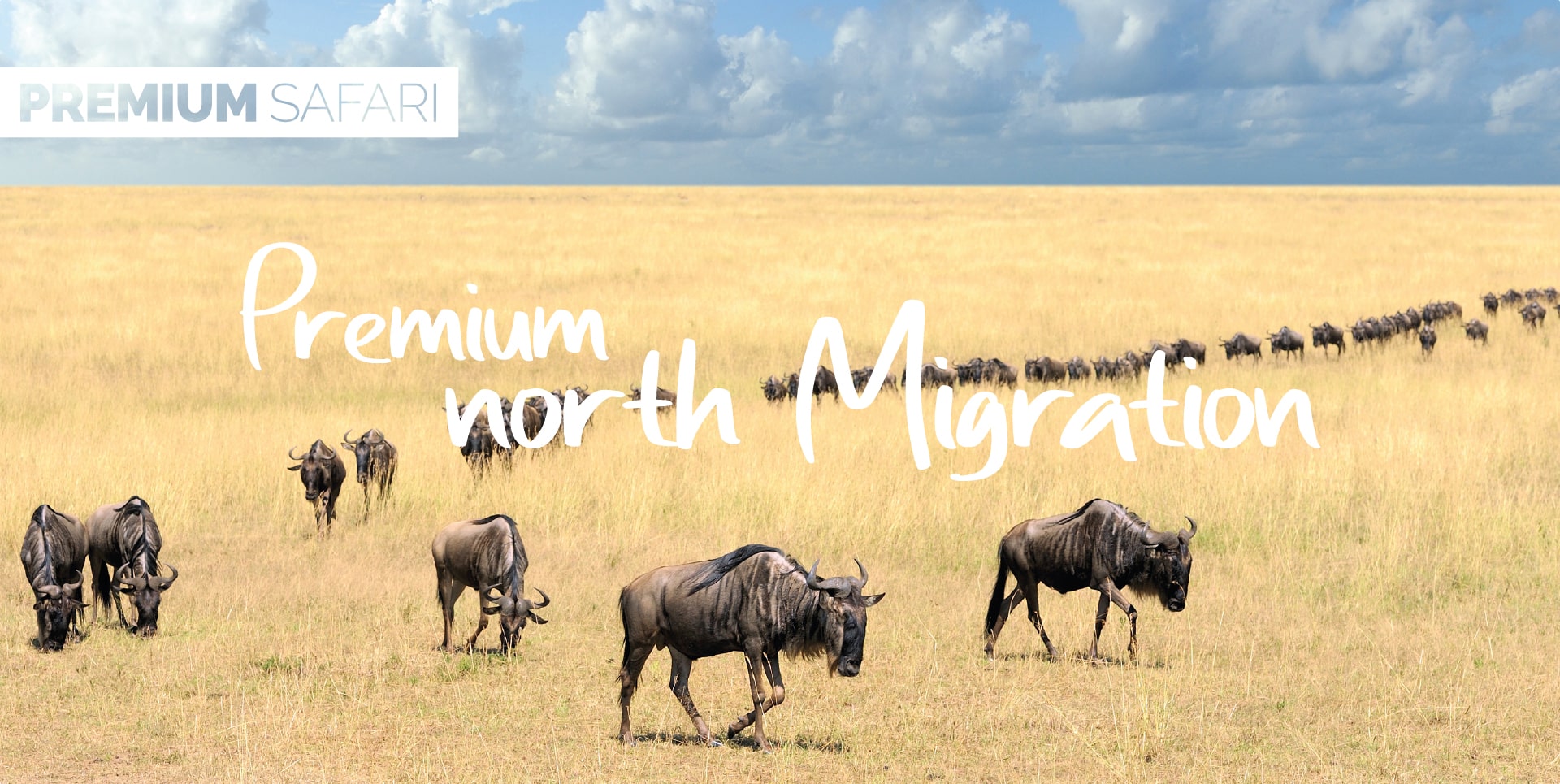
The experience of migration profoundly transforms those fortunate enough to witness it, combining the majesty of boundless landscapes with the intensity of wild life in its purest form. It is not simply observing animals, but witnessing a primordial biological cycle that has been repeating itself unchanged for millennia, dictated solely by the rhythms of the seasons and the search for water and nourishment.
Experienced guides know exactly where and when to position themselves to witness the most significant moments of this spectacle, allowing travellers to be in the perfect spot as nature stages its grandest theatre. From the roar of thousands of hooves raising clouds of red dust, to dramatic river crossings punctuated by crocodile ambushes, a migration safari offers moments that will be etched in the memory and soul forever.
The Great Migration represents one of the most extraordinary natural phenomena existing on our planet, a cyclical movement involving some 1.5 million wildebeests, 200,000 zebras and 350,000 Thomson’s gazelles. This massive mass exodus takes place within the ecosystem of the Serengeti National Park: the land of endless plains in Tanzania, extending as far as the Masai Mara reserve in Kenya, in a circuit that covers almost 1,000 kilometres.
The driving force behind this extraordinary movement is the search for water and fresh pastures, following the rhythm of the seasonal rains that transform the arid plains into verdant expanses of grass. The animals, guided by an ancestral instinct, follow the rain-laden clouds in a continuous journey that knows no real stops or definitive points of arrival.
The ecological importance of migration goes far beyond the visual spectacle it offers. This mass movement plays a fundamental role in the balance of the entire ecosystem: migratory herbivores keep grasslands healthy through controlled grazing, distribute seeds through their faeces, and sustain populations of predators such as lions, cheetahs, leopards and hyenas that follow the herds. It is a perfect example of how nature creates interdependent systems where each element contributes to the balance of the whole.
The migration route follows a circular pattern that repeats itself with surprising regularity, albeit with variations dictated by rainfall patterns.
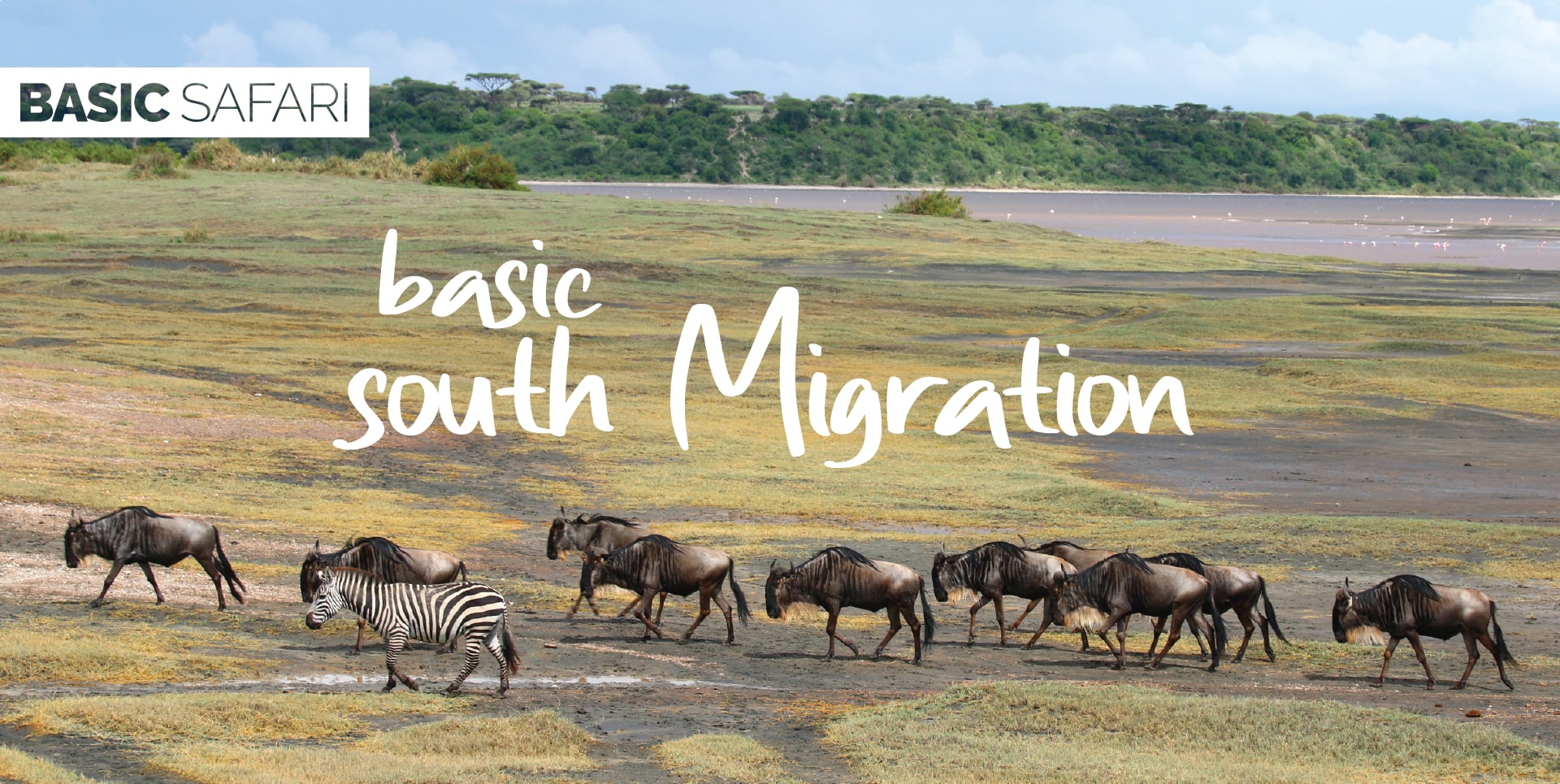
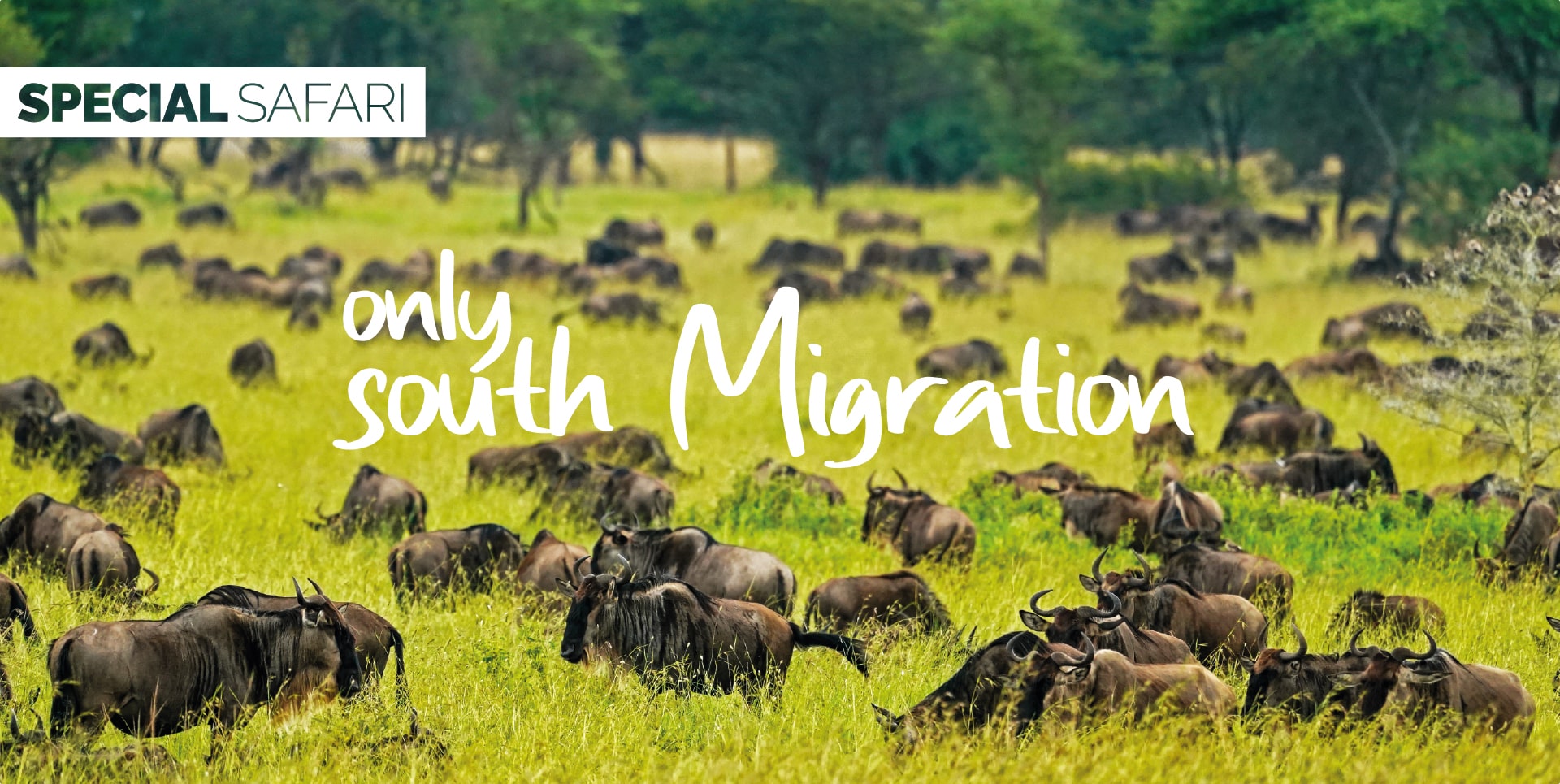
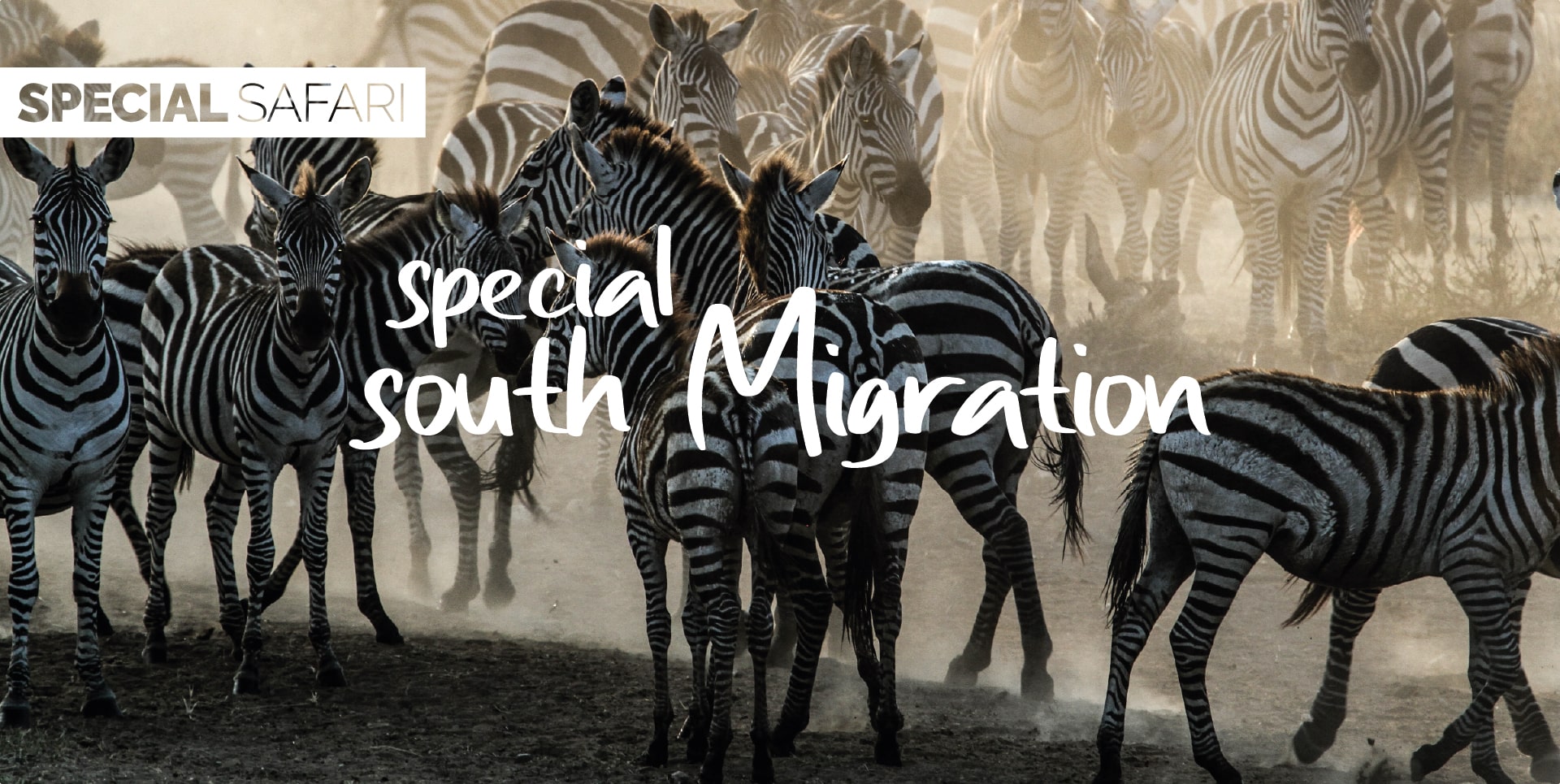
From December to March, the herds concentrate in the southern plains of the Serengeti and in the Ndutu area, where the mineral-rich grass favours the birthing season. Here, in just a few weeks, some 500 000 baby wildebeests are born, an extraordinary spectacle of life.
Between April and May, as the southern pastures become depleted, the herds begin to move north-west, crossing the central Serengeti. This period often coincides with the long rainy season, during which the animals disperse over a wider area, making sightings less concentrated.
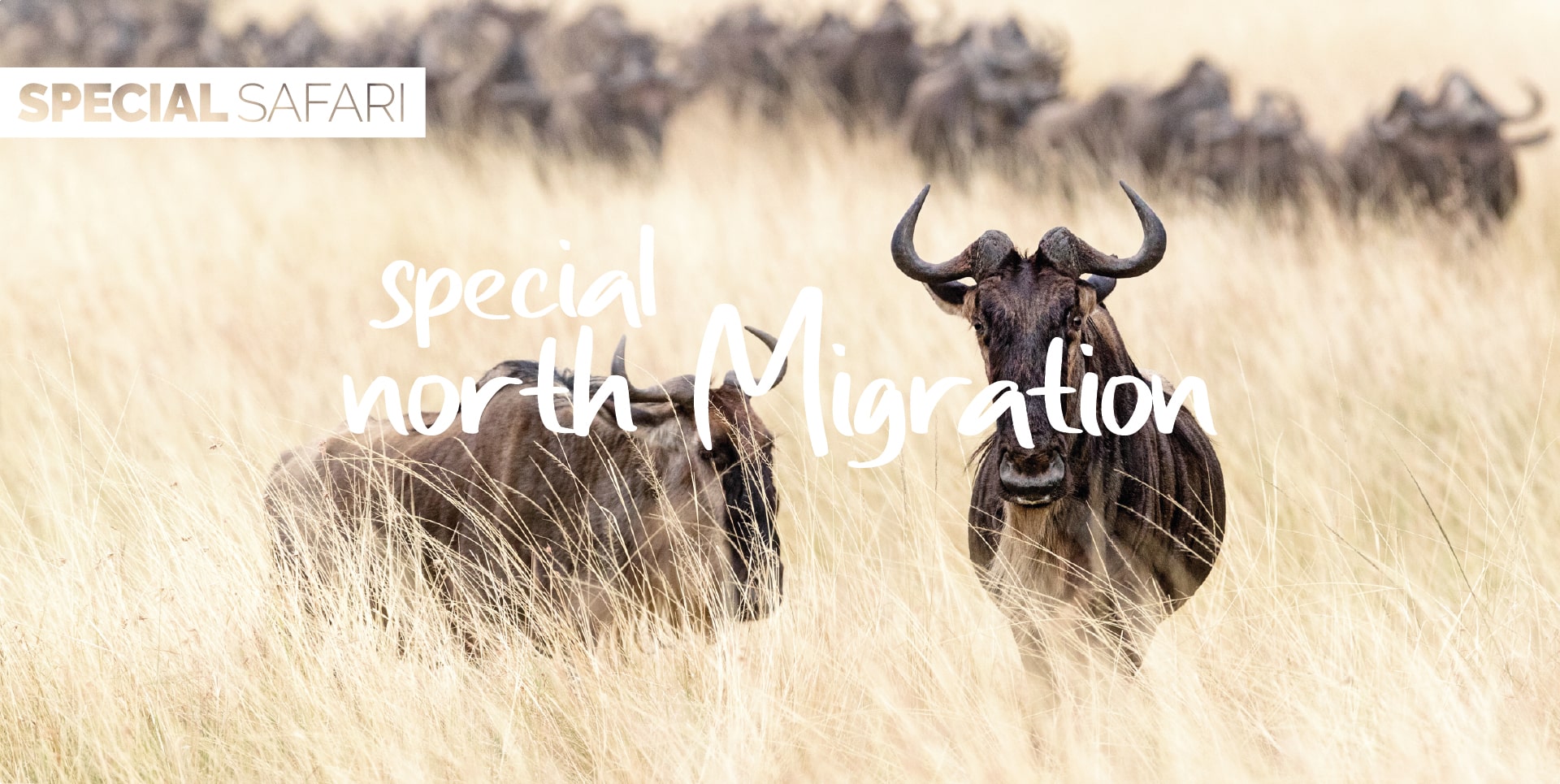
June and July see the herds reach the western and northern Serengeti, where the first significant concentrations begin to form in preparation for the crossing of the Grumeti and Mara rivers.
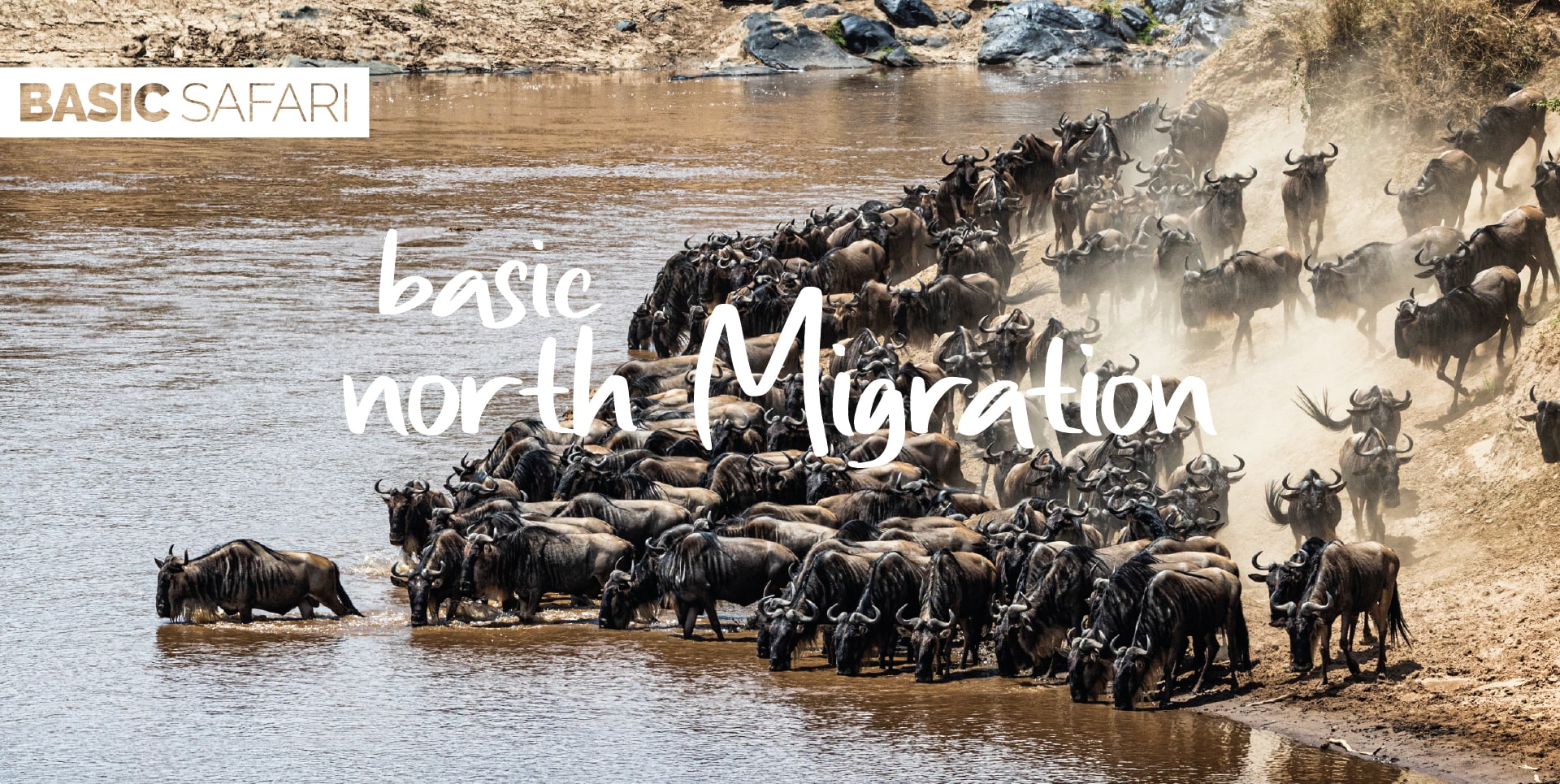
August and September represent the most dramatic time of the cycle, when hundreds of thousands of animals cross the treacherous waters of the river between Tanzania and Kenya, facing dangerous currents and lurking predators.
From October to November, with the onset of the short rains, the herds begin their journey back south, crossing the eastern and central Serengeti again, to complete the cycle and begin this eternal circular movement again.
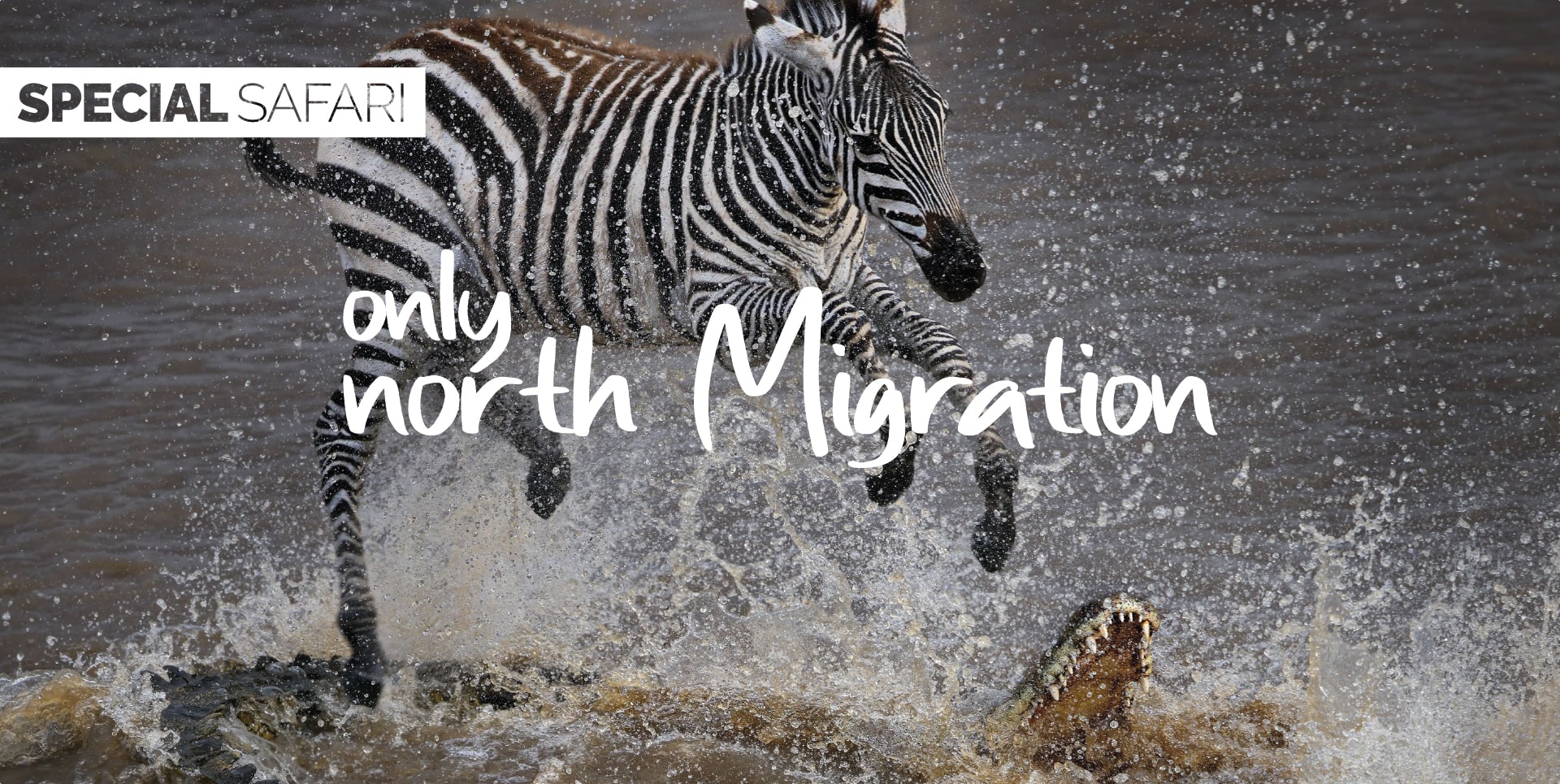
Within the migratory cycle, certain moments stand out for their dramatic intensity and naturalistic value. The crossing of the Mara River, which generally occurs between August and September, is probably the visual highlight of the whole phenomenon. Thousands of wildebeests cluster on the banks, hesitating before diving into the turbulent waters where giant crocodiles wait in ambush while the weaker ones are often swept away by the current, creating scenes of powerful natural drama.
The calving season in the southern Serengeti, between January and February, offers a completely different but equally exciting spectacle. During this period, around 8,000 baby wildebeests are born every day, some able to get up and run with the herd just five minutes after birth. This explosion of life naturally attracts predators such as lions and hyenas, creating an intense and primal survival dynamic.
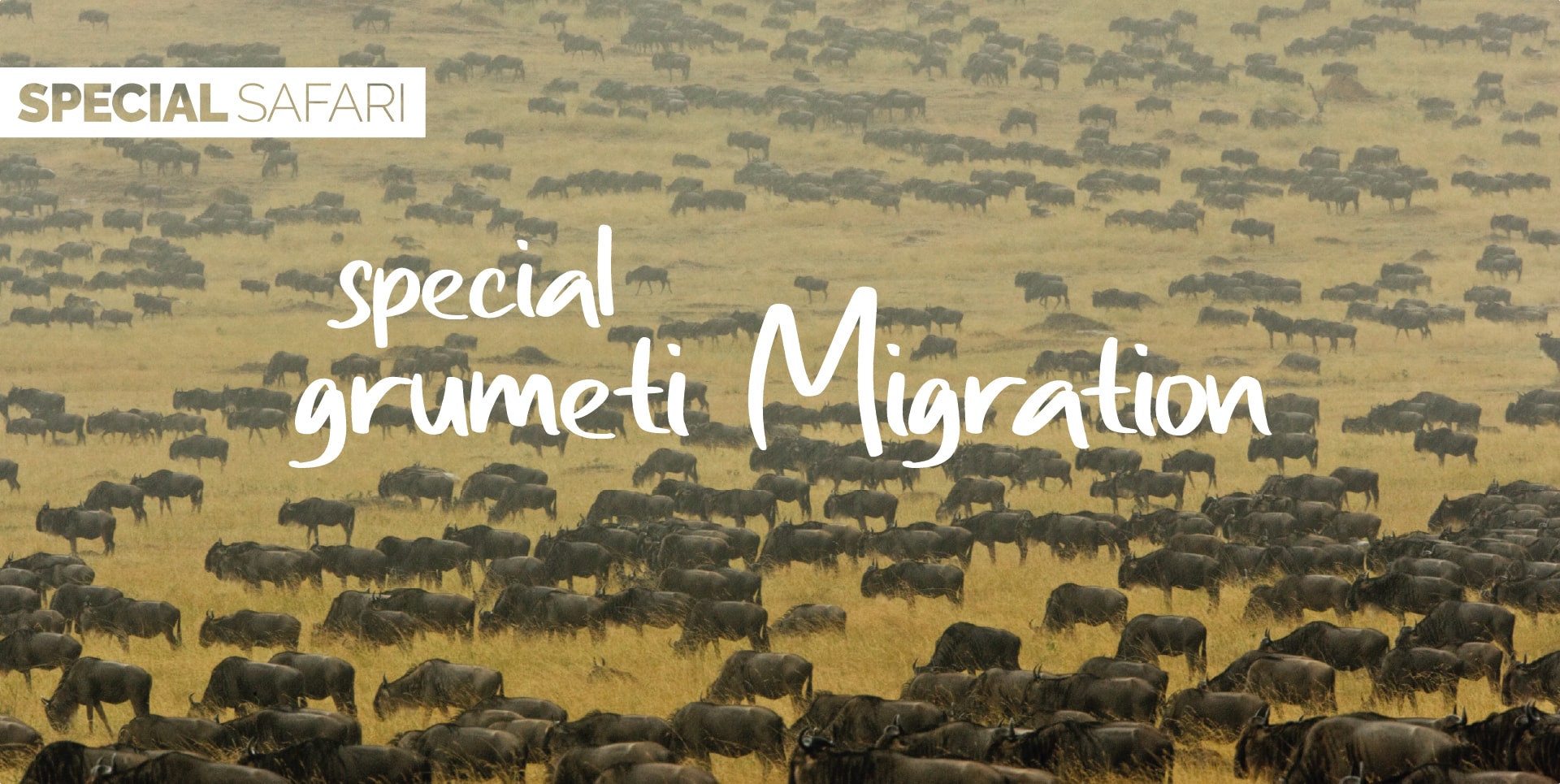
No less impressive are the large gatherings that form in the open plains, when hundreds of thousands of herbivores gather in formations that stretch to the horizon, creating a living carpet that moves in unison as if guided by a collective intelligence, offering one of the most mesmerising spectacles that nature can present.
A safari specifically dedicated to the Great Migration differs profoundly from a traditional safari experience. The main difference lies in the flexibility and specialisation of the itinerary, which is designed to follow the movement of the animals rather than simply visiting predetermined parks. Specialised operators continually adapt their routes according to the actual conditions on the ground, communicating between camps and vehicles to locate the most active points of the immense migratory flow. The experienced guides employed on these safaris have a thorough knowledge of the terrain, migration patterns and animal behaviour that goes far beyond standard training. They know how to interpret nature’s signals, from the movement of clouds to the behaviour of birds, to predict herd movements and position travellers in strategic locations hours or even days in advance of the climaxes. The real magic of a migratory safari lies in its controlled unpredictability. Whereas a standard itinerary visits fixed locations regardless of the activity present, the migratory safari moves organically with nature, offering an authentic experience where each day is determined by the rhythm of wildlife rather than by a rigid pre-determined schedule.
The concentrated and specific nature of a migration safari exponentially amplifies the chances of witnessing extraordinary moments that would otherwise remain hidden from visitors on generalist itineraries. Predators follow the migratory herds, creating a very high density of predator-prey interactions that are not observed as frequently at other times of the year. During a well-planned migratory safari, it becomes possible to witness very rare scenes: lions coordinating an attack on crossing wildebeests, crocodiles suddenly emerging from the murky waters to grab a zebra, or the thrilling moment when a newborn wildebeest baby takes its first steps while its mother protects it from the surrounding dangers. The concentration of life is such that many professional wildlife photographers spend weeks following the migration to capture those fleeting moments that define a career. The special planning of these safaris allows visitors to spend more time at the places of greatest activity and less in transfers, maximising the time spent observing and minimising the time spent travelling between points.
The migration safari is the supreme experience for those seeking total immersion in African nature at its most intense. For photographers, migration offers unique opportunities to capture images of extraordinary impact: the golden dust kicked up by thousands of hooves at dusk, the dramatic contrast between the animals and the boundless landscapes, or the precise instant when a predator attacks create photographs of exceptional narrative power. Wildlife enthusiasts find in migration a condensation of animal behaviour that cannot be observed elsewhere with such frequency and intensity. Communication between herds, survival strategies, and social dynamics between competitive predators are continuously manifested, offering a real crash course in ethology in the field. For travellers who have already visited Africa on traditional safaris, the migration experience represents a qualitative leap that completely redefines the concept of wildlife travel. It is not simply a matter of seeing animals but of witnessing a planetary event that transcends mere tourist observation to become a transformative experience that connects the visitor to the great primordial cycles of life on Earth.
Planning a safari dedicated to the Great Migration requires a thorough understanding of seasonal cycles and animal movements. The fundamental truth to understand is that there is no universal ‘perfect time’, as each phase of migration offers different and equally extraordinary experiences. The choice depends mainly on which aspects of this natural phenomenon one wishes to favour. It is important to remember that, despite the relative predictability of the migration cycle, nature always retains an element of unpredictability. Rainfall can anticipate or delay it, influencing the movement of herds. A specialised operator will constantly monitor the actual situation in the field, adapting routes to maximise the chances of being in the right place at the right time.
The months from December to March are ideal for those wishing to witness the calving season and large gatherings in the southern plains, while the period from June to September is perfect for those who dream of seeing dramatic river crossings. The low season (April-May and November) offers advantages in terms of reduced costs and less crowding, but with more unpredictable weather conditions and potentially more scattered sightings.
The period between January and March represents one of the most extraordinary moments in the migration cycle, when the huge herds concentrate in the southern plains of the Serengeti and the Ngorongoro area. What makes this phase so special is the event of the calving season, when more than 500,000 young wildebeests are born within a few weeks. The open terrain of the southern plains offers optimal visibility to observe this extraordinary phenomenon where thousands of new lives come into the world every day. Female wildebeest give birth in a synchronised manner, an evolutionary strategy that saturates predators and allows most of the young to survive. This period is characterised by intense natural drama: newborns must get up and run within minutes of birth to avoid predators attracted by the abundance of vulnerable prey. The landscape during this season takes on emerald green hues as a result of the short rains in November and December, creating a stunning backdrop for photographs. The concentration of animals is such that herds often stretch as far as the eye can see, forming a living carpet that moves as one across the plains. For lovers of wildlife photography, the opportunities to capture powerful images that combine life and death, vulnerability and resilience are virtually endless.
The period between June and September coincides with the most dramatic and photogenic phase of the entire migration cycle: the crossings of the Grumeti River in the western Serengeti and the Mara River in the northern Serengeti. During these weeks, the tension in the air is palpable as hundreds of thousands of wildebeest and zebra amass on the banks, driven by migratory instinct but hesitant in the face of the river’s obstacle. The crossing is an adrenalin-filled event: once the first animals dive into the water, the entire herd follows in a cascade of bodies pouring into the river. The Nile crocodiles, some of which have lived for over 70 years and reach an impressive size, wait for this moment for months, emerging from the murky waters to grab the weaker or unfortunate animals. On the banks, lions and hyenas take advantage of the commotion to ambush the exhausted animals as they make their way up the banks. The unplanned nature of these crossings makes the experience even more intense: they can occur at any time of the day, when a braver or more desperate animal finally decides to pounce, triggering the movement of the entire herd. Days of seemingly quiet waiting can pass before the action suddenly explodes into scenes of almost unbearable intensity, transforming a silent landscape into a whirlwind of movement, sound and drama in a matter of minutes.
Planning an effective route for the Great Migration requires flexibility and adaptability. There is no standard year-round route, but modular solutions that follow the actual location of the animals in different seasons. Itineraries vary from 5-6 days to 10-12 day experiences, allowing different phases of the migration phenomenon to be explored. Adaptation is key: weather conditions can change the movement of herds, making it essential to adjust the programme at short notice. Safaris can be organised as exclusive experiences or as part of a broader itinerary that includes other Tanzanian parks and Zanzibar, always guided by experts in constant communication to locate the points of greatest activity.
Mobile safaris offer the most authentic experience of following the migration. These itineraries use tented camps that are moved to follow the movement of the herds, ensuring that you are always in the heart of the action. Accommodation is surprisingly comfortable despite the temporary nature, with tents equipped with real beds and private bathrooms. Sleeping with only the fabric of the tent separating you from the savannah adds a dimension of primal connection to the experience. The main advantage is flexibility: camps move quickly in response to animal movements, ideal for adventurous travellers seeking total immersion in the natural environment.
For those who prefer more comfort, stationary Tanzania photographic safaris offer an excellent alternative. These itineraries utilise lodges or permanent camps in strategic locations from which daily excursions to the main activity points depart. The permanent lodges offer superior comforts: swimming pools, top-notch restaurants and other amenities to relax in after intense days on safari. Many are located in scenic spots, sometimes allowing you to observe the migration directly from your veranda. This formula involves excursions in open 4×4 vehicles, guided by experienced rangers in constant communication. Ideal for families or travellers who want a more relaxed experience without sacrificing the intensity of the sightings.
For an authentic Great Migration experience, it is essential to rely on a Tanzania safari tour operator with specific experience and in-depth knowledge of the area. Choosing the right partner determines the quality of the experience more than any other factor.
Specialised operators offer constantly updated itineraries based on actual animal movements, not rigid pre-packaged programmes. Each proposal details the route day by day, adapting it to field conditions and personal preferences to ensure a tailor-made experience that maximises the chances of extraordinary sightings.
Proper preparation is essential to fully enjoy the experience. Clothing should favour neutral colours (beige, khaki, olive green) that do not disturb the animals, in light but durable fabrics, with long sleeves and trousers for protection from sun and insects. For photographers, the minimum recommended equipment includes a telephoto lens (at least 300mm), a spare camera body and extra batteries. Quality binoculars (8×42 or 10×42) are essential for all participants. Do not underestimate protection: a wide-brimmed hat, sunglasses, high-protection sun cream and insect repellent are essential. Basic medicines, including anti-diarrhoeics and antihistamines, complete the equipment. Mentally, be prepared for flexibility: schedules may change, transfers become longer and weather conditions change rapidly. Adaptability is as crucial as physical equipment to fully appreciate a migratory safari.
Witnessing the Great Migration transcends the simple tourist experience to become a profound inner journey. Faced with the immensity of this natural phenomenon, one perceives one’s own smallness and at the same time the connection with the great cycles of life. This primordial spectacle reminds us that we are part of something bigger, a planetary ecosystem where every element is interconnected. The daily struggle for survival, the determination of animals to face seemingly insurmountable obstacles, the poignant beauty of endless landscapes speak directly to an ancestral part of us. In today’s hectic world, few experiences allow us to reconnect so deeply with the Earth’s natural rhythms and with our own nature. Migration teaches us resilience, adaptability and the importance of following our deepest instincts, lessons that resonate far beyond the journey itself.
Anyone who has witnessed the Great Migration confirms that it is an experience that marks a dividing line: there is a before and an after in one’s life as a traveller. The intensity of the emotions experienced creates memories that do not fade but rather are enriched with new nuances and meanings over time.
More than photographs or souvenirs, what one takes home is a renewed perspective on life, nature and one’s place in the world. The Great Migration thus becomes not only the highlight of a trip to Africa, but an existential reference point: a transformative experience that, once lived, continues to nourish the soul long after the red dust of the savannah has settled on the memories.