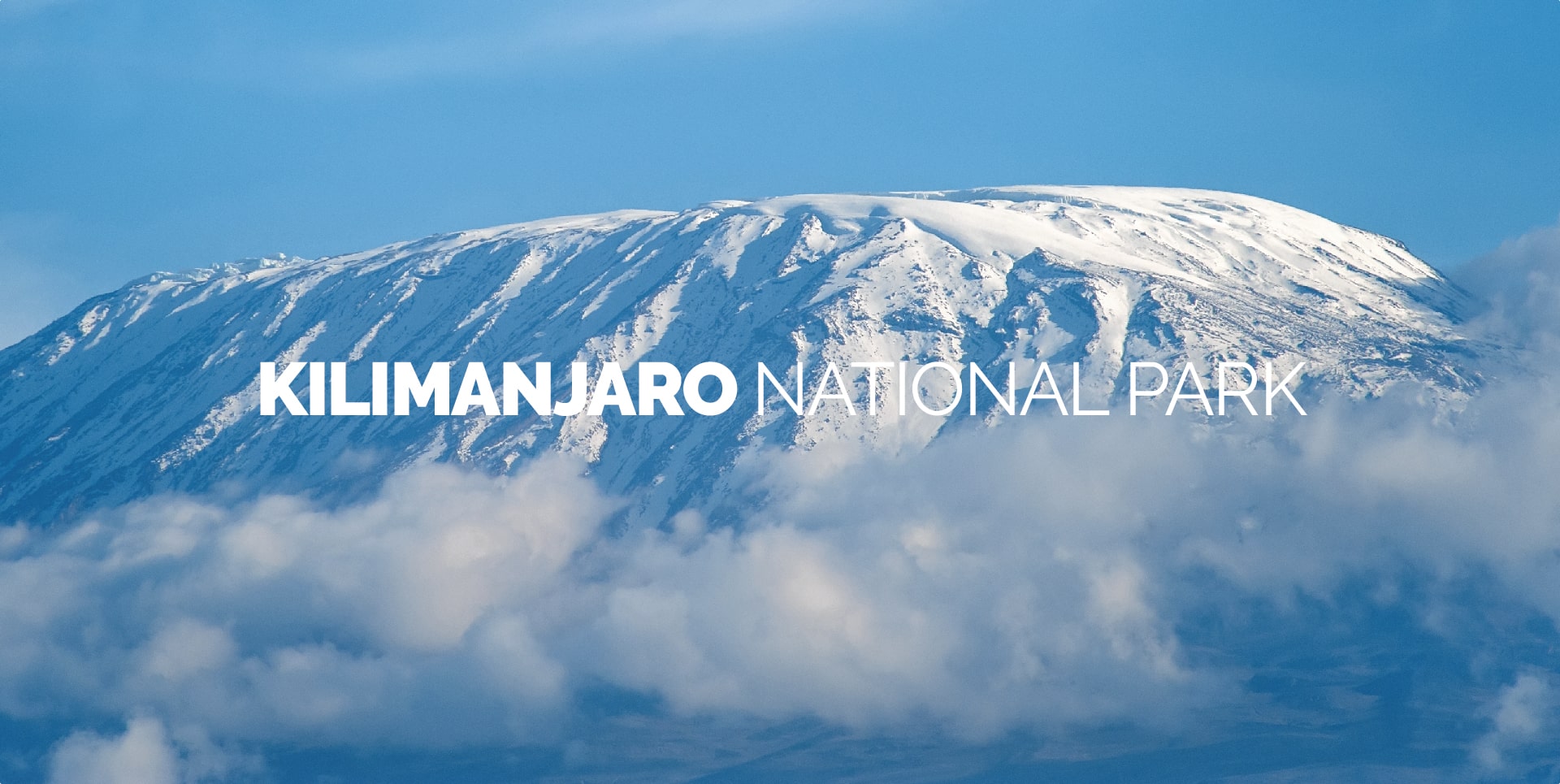
Venturing into the heart of Tanzania means coming into contact with one of the most fascinating natural wonders of the African continent: Kilimanjaro National Park. Here, trekking becomes a true journey of the soul, a path that leads from the lush jungle to the eternal ice of Africa’s highest peak. But Kilimanjaro is not just a mountain: it is a symbol of freedom, a mosaic of ecosystems, an experience that leaves its mark.
A national park embracing the summit of Africa
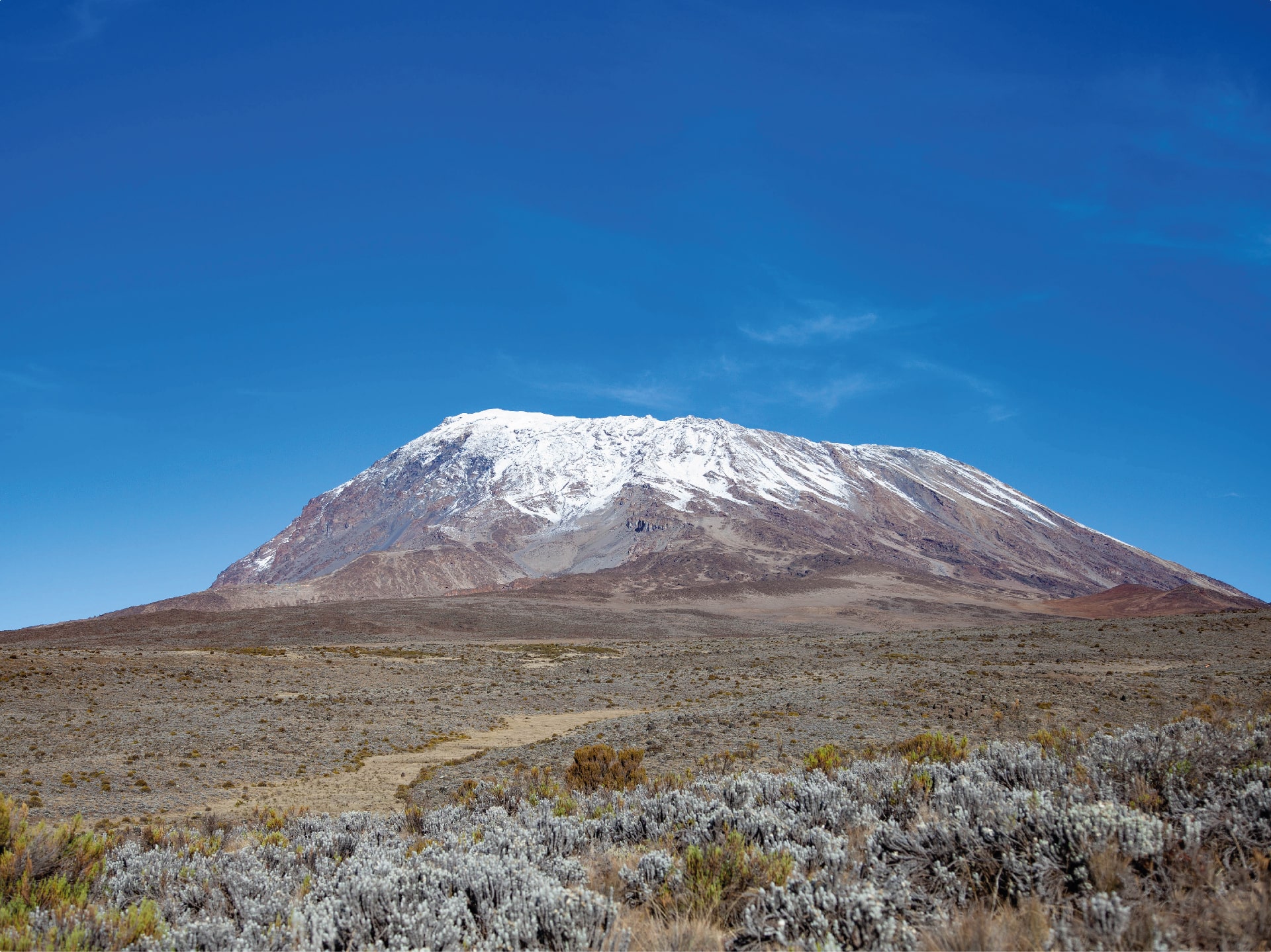
Kilimanjaro National Park stretches around Africa’s highest mountain, protected by UNESCO and rich in biodiversity. Here you go from rainforests, home to colobus monkeys and numerous bird species, to moorlands dotted with giant lobelias and seneci, to glaciers that still endure despite climate change. Each elevation band is a world of its own, making the ascent a true nature crossing.
Where Kilimanjaro is and how to get there
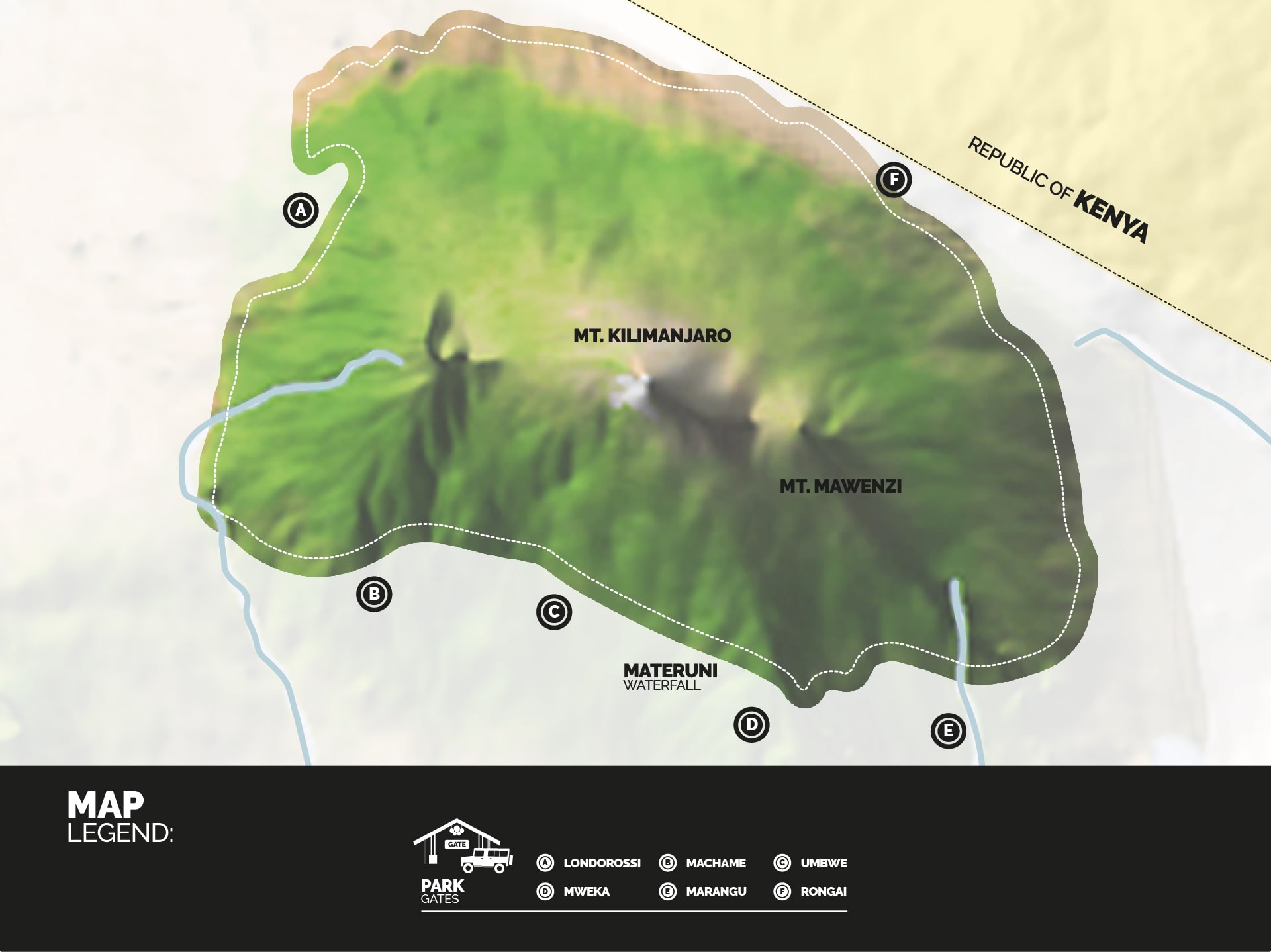
Mount Kilimanjaro is located in north-east Tanzania, close to the border with Kenya. The main gateway is the town of Moshi, easily accessible from Kilimanjaro International Airport, which also serves Arusha, another base of operations for excursions.
Organising the trip is easy, especially if you rely on our Tanzania safari tour operator, who can combine the ascent of Kilimanjaro with other experiences in the region.
The most fascinating routes to climb Kilimanjaro
There are several routes leading to the summit, each with its own characteristics. The Machame Route is perhaps the most scenic, with a varied route and incredible views. The Marangu Route, also known as the ‘Coca-Cola Route’, is the only one with huts along the way, ideal for those seeking more comfort. The Lemosho and Rongai routes, on the other hand, are less frequented and offer a more authentic immersion in nature. Whichever trail you choose, Kilimanjaro offers a unique sense of achievement.
A trek suitable even for non-experts
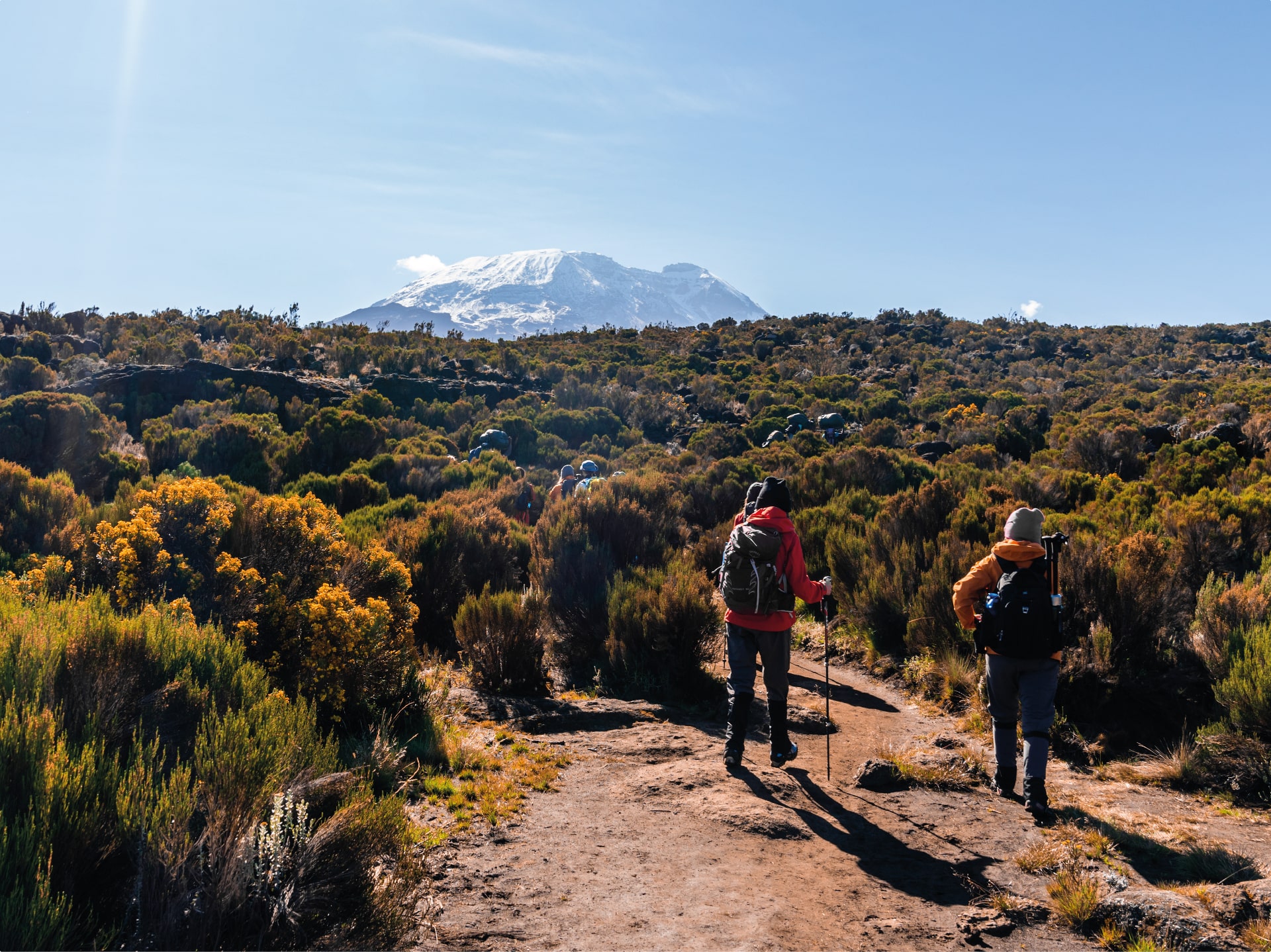
Contrary to popular belief, trekking on Kilimanjaro is not just for experienced mountaineers. The use of ropes or crampons is not necessary, but good physical fitness and, above all, attention to acclimatisation is required. Altitude can be an obstacle, but with a well-organised programme and a few extra days to climb, even those who have never tackled high altitude trekking can reach Uhuru Peak, the 5,895 metre peak.
Fauna and vegetation along the way
One of the most striking aspects of the Kilimanjaro National Park experience is the variety of environments traversed. Stratovolcano in quiescence has three volcanic cones Shira, Mawenzi and in the centre Kibo, whose summit is covered by a perennial glacier. Kilimanjaro Park has such a large area (756 km²) and different altitudes that it can be subdivided into 5 macro areas with specific flora and fauna characteristics.
Bush area (800 to 1,800 metres)
This area, once lush forest, is now extensively cultivated by the local people, particularly the Chaga, who are the third largest ethnic group in Tanzania. Typical coffee and banana plantations can be observed. Despite the increasing patterns of native vegetation that continue to exploit the land, a few hundred elephants and a few black buffalo and leopard still survive.
Rainforest area (1,800 to 2,700 metres)
Dominated by a dense vegetation of tall trees, whose luxuriant foliage completely covers the paths, forming suggestive gallery forests, it is certainly an ideal habitat for a wide variety of local fauna. Among the mammals, several species of antelope (alcine antelope, Abbot antelope) and primates (baboon, guenon, bear colobus) stand out. In addition, about 180 bird species have been recorded, including the rare Abbot starling.
Heath area (2,700 to 4,000 metres)
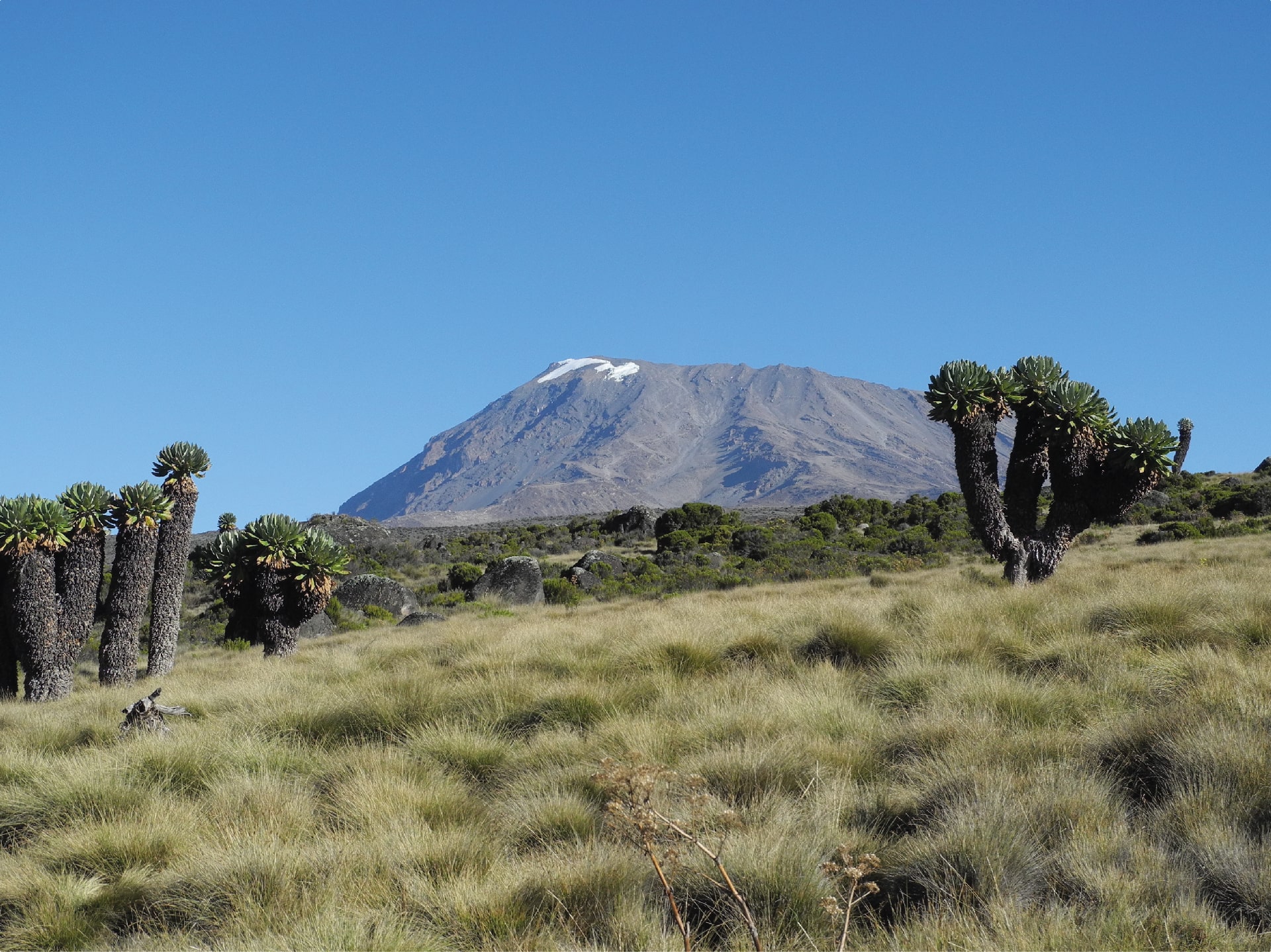
In this area, characterised by a colder and drier climate, we first find a wide expanse of heather, which, as we climb higher, gives way to tall grasses, endemic plants, wild flowers and giant lobelias. The skies of this area are often flown over by bearded vultures and crowned eagles.
High altitude desert area (4,000 to 5,000 metres)
Peculiar ‘alpine desert’ with extreme temperature variations and sparse vegetation of mosses and lichens.
Glacier area (5,000 to 5,895 metres)
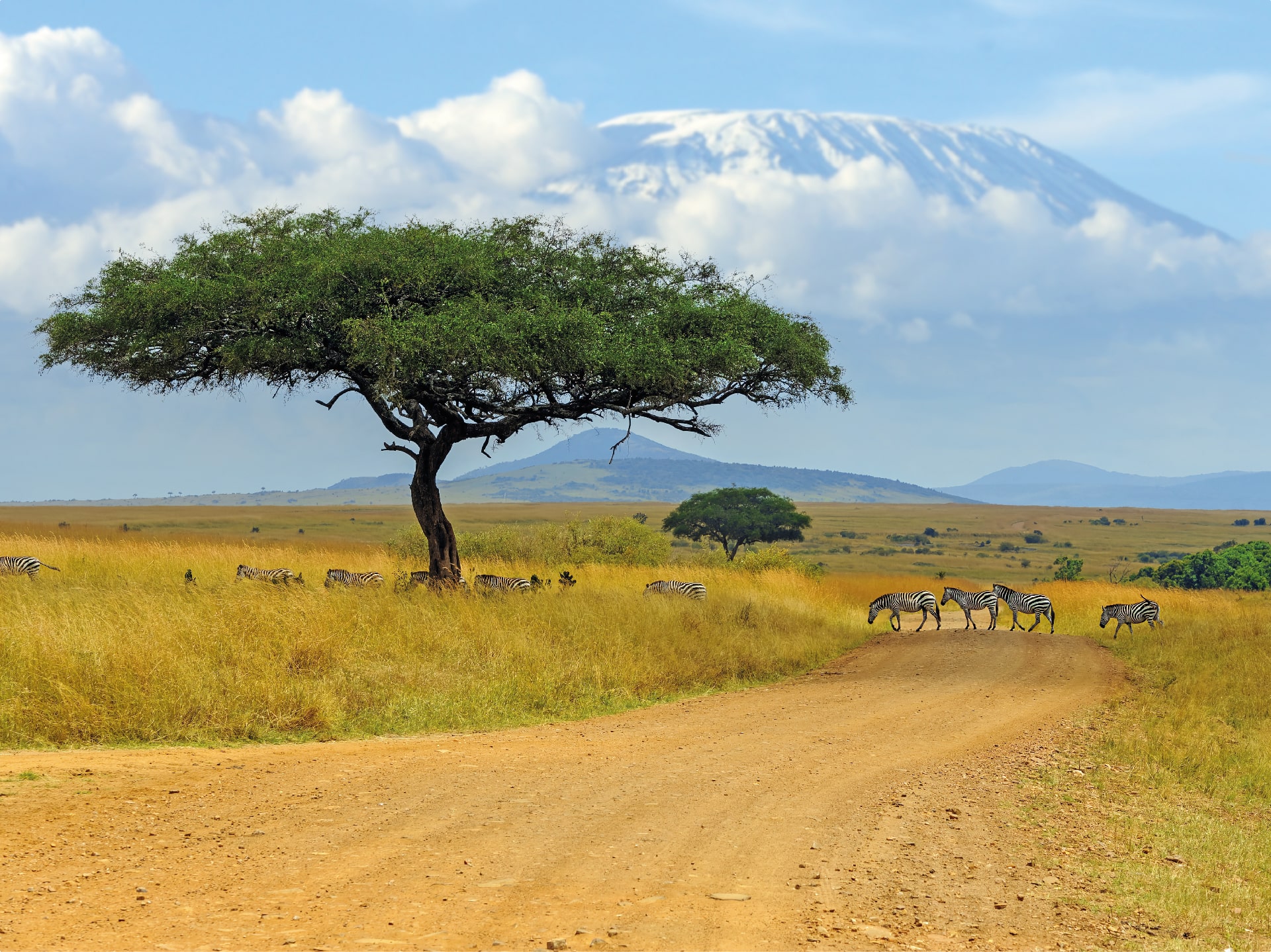
Also known as the Arctic zone, it is the summit of Kilimanjaro, characterised by perennial ice that provides an exciting contrast to the savannah below, visible on a clear day.
What to expect from a trek on Kilimanjaro
Every step towards the summit is an alternation of enterprise and wonder. The body gets tired, but the spirit recharges itself with each new sight, each new silence. The starry sky above the base camp, the icy wind that caresses the face at dawn, the collective embrace of the other walkers are moments that remain etched in the heart. Kilimanjaro National Park is not just a destination: it is a rite of passage, a stop for the soul.
When to climb Kilimanjaro
The best times for trekking are from January to March, when the weather is drier and colder, and from June to October, with stable but more crowded days. Avoid the rainy seasons, which make the trails slippery and less pleasant. At the summit, temperatures can drop well below zero throughout the year, so it is good to be equipped with appropriate technical clothing.
Alternative experiences for those who do not want to climb to the summit
The park is not just for those aiming for the summit. Those who prefer a more tranquil approach can enjoy hikes in the forest, ideal for observing the fauna or birdwatching. Cultural visits to Chagga villages are also interesting, where you can discover local traditions and taste the coffee grown on the slopes of the mountain.
Many choose to combine these experiences with an exciting safari in Tanzania, creating a complete itinerary between nature and culture.
Who should visit Kilimanjaro National Park
The experience in Kilimanjaro National Park is perfect for motivated hikers, experienced travellers and nature lovers. But it is also suitable for those looking for a trip with deep meaning, without necessarily tackling the whole climb.
Each visitor can find his or her own dimension, from the most challenging itineraries to more relaxed activities. And for those who want to extend their itinerary, our Tanzania safari packages and best prices are the perfect opportunity to continue the adventure.
A mountain that speaks to the heart
Kilimanjaro is much more than a snowy peak. It is a symbol of endurance, an inner gymnasium, a place where nature becomes the teacher of life. Whether you choose to reach Uhuru Peak or explore the forests that surround it, the mountain offers authentic emotions.
And once back in the valley, many choose to complete the experience with a Big Five safari in Tanzania, to admire elephants, lions and leopards in the wild. Kilimanjaro thus becomes the starting point of an even bigger journey: the journey within oneself.